A new Silent Hill game is always an event, but Silent Hill: Townfall somehow never really came together for me. The previous Silent Hill f had a few interesting ideas, but it also went in a direction I did not enjoy. Its central theme focused heavily on Japanese patriarchy, while the story only properly opened up after multiple playthroughs. The developers also moved away from tying Silent Hill to one specific town. Now "Silent Hill" is more of a concept, and almost any settlement can become its own fog-covered hell.Silent Hill: Townfall continues that updated approach. This time the action moves to Scotland, the protagonist is Simon Ordell, and the entire game is played from a first-person perspective. There are plenty of changes, but the audience response has been much less enthusiastic than the critical reception. Despite strong review scores, a relatively modest price, and a fresh approach, the player reaction has been far more divided.I finished Silent Hill: Townfall from beginning to end, and instead of the philosophical questions a good entry in the series usually leaves me wanting to discuss, I was left with emptiness. Why is the new Silent Hill so boring? What went wrong with its story and gameplay? And what could this experiment mean for the future of the series? Let's break it down.
Silent Hill: Townfall story and atmosphere
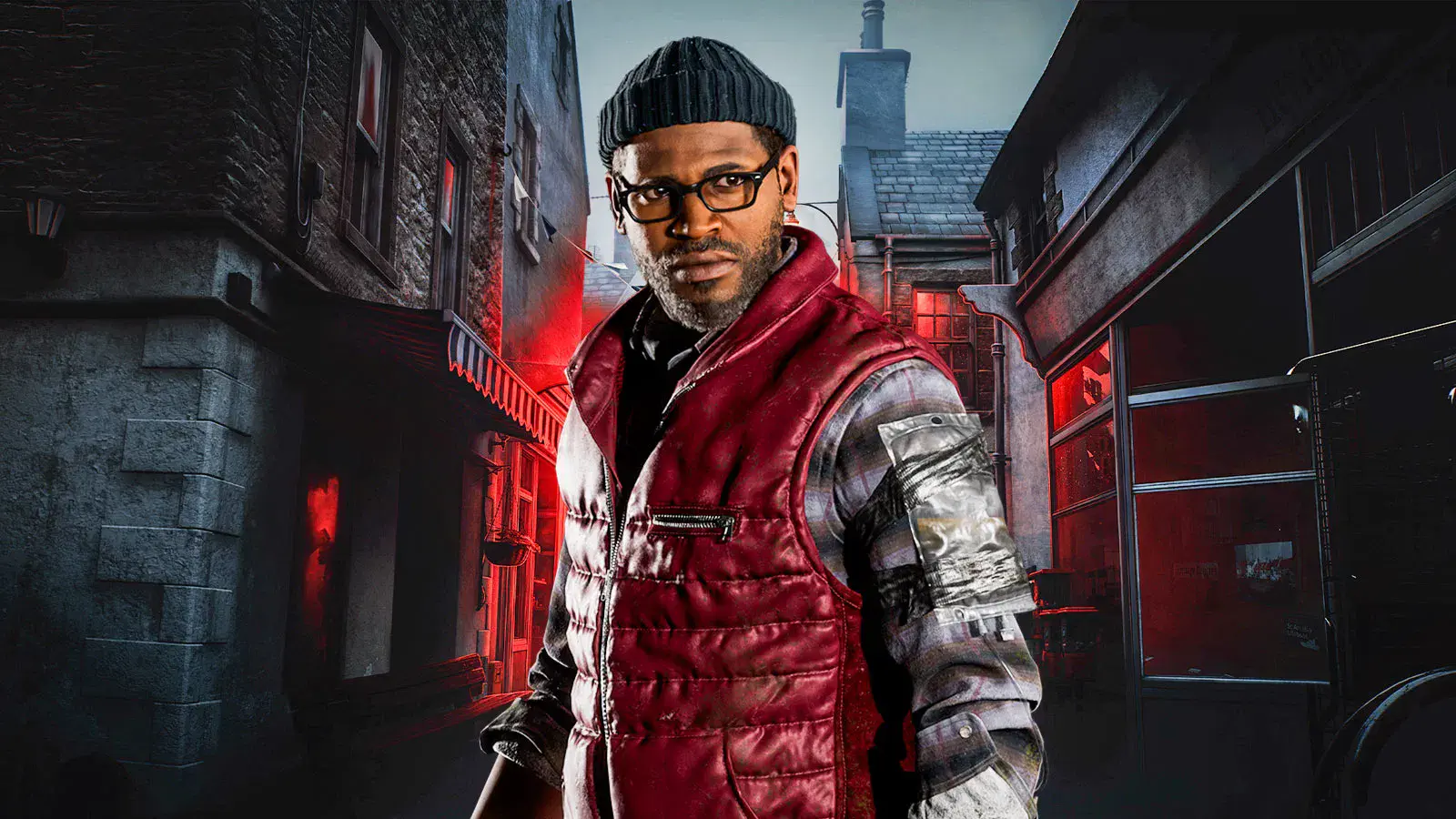
The new foggy town is called St. Amelia. Even under normal circumstances, this remote Scottish coastal settlement feels bleak. Everyone knows everyone else, people either work in local shops or for the one major company keeping the place alive, and tourists or outsiders are noteworthy simply because they are there.Image unavailableThat makes the choice of protagonist more unusual. Simon is not really part of this place anymore. He arrives from the mainland, knows almost nothing about what has happened in St. Amelia, and initially seems disconnected from its residents both physically and emotionally. His entrance is memorable, too. Simon literally bursts out of the water onto the pier like something launched from a trapdoor. He remembers almost nothing about his past, and nobody is coming to explain things, so forward is the only direction available.St. Amelia looks empty when Simon arrives, but that does not mean the town is uninhabited. Human-like monsters are everywhere, while two other characters actively communicate with him: a mysterious man named Richard and a nurse named Zoe. They reach Simon through the CRTV, a strange pocket television that can display images and also reveal enemies through walls.Armed with a plank and this miracle of obsolete technology, Simon starts working his way through St. Amelia with two obvious goals: figure out what the hell happened here and understand why any of it has anything to do with him. The setup is genuinely intriguing. At the very least, the mystery works much better for me than it did in Silent Hill f, where the whole thing eventually collapsed into cheap anime melodrama.Journalists were not wrong, however, when they described Townfall's story as "more straightforward." You start suspecting the core idea fairly early, later learn exactly what happened, and only the specific roles of the three central characters remain unclear until close to the finale.Image unavailableThe problem is that the symbolism is almost aggressively obvious. It feels as if the writers were terrified that players might somehow miss the brilliant point. Here is a protest. A little farther on, there are piles of bodies. Here is a burned old man monster referencing a burned old man. Here is another creature with a metal object embedded in its head and its limbs bound. Then we get contaminated water and black fluid that gives Simon another chance at life.
Show spoilerHide spoiler
Add a generous pile of documents that practically spell out the history of the town's oil industry and the disaster on the offshore platform, and there is almost nothing left to interpret. Missing the central idea would require active effort.
On one hand, that is a positive. Townfall does not repeat the narrative mess I felt Silent Hill f became. On the other, it is simply too easy. There is barely anything to debate, and the story leaves almost no room for a second meaning.Image unavailableAt its core, this is a familiar story about corporate negligence and ruthless capitalism. The subject itself is not the problem. Industrial disasters caused by management cutting corners are horrifying for very obvious reasons. The question is whether the same idea could have been presented in a more interesting way. Of course it could.You would not even need to change the basic concept. The nightmare simply needed to be less explicit about what every symbol represented. This may be the first Silent Hill ending I can remember that did not shock me or leave me staring at the screen, but instead produced something closer to: "Well, okay." Silent Hill f was different only in the sense that I barely felt anything after the first run there either.The town itself deserves praise. Players familiar with coastal Scotland will probably appreciate how carefully the environments capture the region, especially because St. Amelia clearly draws from real places. Everyone else still gets an oppressive sense of decline and isolation. Step into streets where fog hides everything more than a few meters away while something unknown moves in the distance, and the immediate reaction is simple: yes, this feels like Silent Hill.Image unavailableVisually, the game does a great job of reinforcing that slow, heavy atmosphere. Some PC players have reported bugs and frame-rate drops, but I encountered no major problems on console. The audio design deserves particular praise. Townfall does not have many musical themes I expect to remember for years, but the sound of St. Amelia itself is excellent.The developers also kept an "Otherworld" version of the settlement, although they changed the visual language. Instead of covering everything in rust or flowers, the hostile version of St. Amelia turns the sky a violent red. Navigation suddenly becomes much harder, and the atmosphere is oppressive enough to create almost physical discomfort.Later, enormous pipes begin wrapping around buildings like an industrial metal web. It creates exactly the right feeling of isolation and claustrophobia, particularly because roughly half of the game takes place in narrow, dark corridors surrounded by concrete walls, pipes, and workplace notices.That brutalist industrial style has a downside. Out in the town, the scenery mostly works, even if you eventually get tired of seeing similar sheds. Indoors, repetition becomes much harder to ignore. Textures are constantly reused, environments feel sparse, and far too many empty cabinets seem to exist for the sole purpose of making you spend another couple of seconds checking them.
Silent Hill: Townfall gameplay
In my view, Silent Hill has traditionally balanced wandering through a town with exploring closed interior spaces. Townfall does not. Moving through the buildings is painfully dull. For every meaningful story puzzle, there are usually ten half-empty rooms whose only useful feature is another cabinet to hide inside.It quickly becomes obvious that the main goal of the level design was not balance, but placing every important object as far away from every other important object as physically possible.Image unavailableIf you need to find and collect something, you can safely assume it is sitting in the farthest room so that you have to pass every enemy on the way and spend as much time as possible hiding. Even that is not the limit. Once you finally reach the item, you may discover that unlocking it requires going all the way back, doing something elsewhere, and then returning again. It has been a while since I played something this openly disrespectful of the player's time.The basic core mechanic is stealth, and Simon is terrible at it in the least entertaining way possible. Fighting most creatures is strongly discouraged because resources are limited. Instead, you sit in cabinets, throw bricks and bottles, and enjoy all the other pleasures of being deliberately helpless. You cannot reliably trick monsters, incapacitate them non-lethally, or create many clever solutions. Most encounters boil down to waiting until the thing turns around and then sprinting to the next point of interest.Simon gradually finds actual weapons, including a handgun, shotgun, and flare gun. Nobody literally stops you from using them, but the developers have a very specific moral framework for what counts as good behavior. If you shoot too often, the better ending becomes much harder to reach.Image unavailableThe ordinary endings are affected by several hidden factors. Discoveries add points, while enemies killed by Simon, revives through his cannula, and mistakes during Zoe's medical sequence remove them. A single kill or revive hurts the score much more than one document helps it. In other words, the system is designed so that a careless first playthrough can easily push you away from the Justice ending, while experimenting with the combat mechanics is actively punished.The game wants the player to feel powerless in St. Amelia and constantly reinforces that idea. Planks and pipes wear out quickly, while using firearms feels like a moral failure the scoring system will remember later. The designers appear absolutely convinced that hiding in cabinets is not merely acceptable gameplay, but a foundation strong enough to support roughly ten hours of exploration and close to a hundred pieces of optional reading.That means mechanics other studios would treat as secondary are positioned here as the main attraction, and the game expects you to repeat them across multiple runs. The last time I felt this kind of exhaustion was in the forgettable movie tie-in A Quiet Place: The Road Ahead. Its protagonist also spent most of the game collecting supplies and mountains of notes, then crouching in corners because the hyper-sensitive monsters could not be fought normally.Image unavailableThe one thing that improves the situation is the CRTV. Being able to detect threats early and even see them through walls adds some actual tactics, even if it does not solve the overall pacing problem. If that sounds familiar, there is a reason. Members of the development team previously worked at the studio behind Alien: Isolation, and that game also gave its protagonist a dedicated device for tracking an approaching monster.The Alien influence is visible all over Silent Hill: Townfall. The problem is that where the Xenomorph was clever and unpredictable, Townfall has The Weight, an alpha monster whose AI often feels completely broken. Alongside regular creatures, including burned figures and fast enemies with metal embedded in their heads, The Weight appears only a few times but is always presented as an overwhelming force you are supposed to hide from.Its English name is The Weight, which fits the visual metaphor perfectly. The creature is hunched over by grotesque growths piled across its back, physically bent beneath what it carries. The symbolism is not subtle.Image unavailableRegular monsters mostly follow predetermined patrol routes. The main challenge is waiting long enough to observe and memorize the full pattern.Their AI is also clearly tuned to create extra friction. If you do not enter a designated hiding place and instead break line of sight behind a table or another piece of furniture, an enemy may simply refuse to lose interest. It can remain in the room indefinitely, blocking exploration and preventing any clever repositioning.The reason appears simple: the encounter logic has already decided that a confrontation is happening, and if you do not satisfy the expected stealth pattern, the behavior does not properly reset. Your options become running away from the room or eventually getting caught.The Weight is worse. The developers did not manage to make its appearances interesting in the way Pyramid Head or the Xenomorph could be interesting. Sometimes it walks very slowly, sometimes it suddenly moves quickly, but the most frustrating part is that it always seems to know where Simon is. It does not matter whether it can see you or whether you are sitting silently without moving.Image unavailableThe Weight can travel from the other side of the area, arrive near the player, and keep circling until you eventually make a mistake. It also has a charming habit of checking the same room more than once.A typical sequence goes like this. The Weight spots you. You escape and hide in a room. It enters, breathes menacingly outside the cabinet for what feels like five minutes, and eventually leaves. You finally step out, hoping to slip away, and the monster immediately comes back inside. Why? Because it can. There is no convincing internal logic or readable trigger, only a magnetic attraction to Simon's location. The practical result is another long wait in a cabinet or a death that resets the section.These sequences are especially irritating because it feels like you are playing against the game rather than outsmarting the monster. Progress happens not because you found the optimal route or manipulated the enemy intelligently, but because you ran slightly faster, spent valuable flare ammunition to slow it down, or simply died and used Simon's strange black fluid to get another chance.Image unavailableEven that revival mechanic does not always work properly, which appears to be a bug. The cannula refill is supposed to give Simon another chance, but aggressive enemies, including The Weight, can remain directly in front of him, calmly wait through the long revival animation, and kill him again with a single hit. Remember that using these revives also hurts the ending score. Apparently the game did not want survival to feel too convenient.Taken together, the gameplay becomes a painfully slow cycle of hiding. You are weaker than everything around you, constantly watching a tiny CRTV screen, and dealing with AI that seems designed not only to threaten you but to stretch every encounter for as long as possible.You are discouraged from shooting, and in many sections running freely is not much better. Even the second-chance mechanic introduced by the developers can end up making the game more frustrating while also making you feel as if you are playing "wrong" because every revive moves you farther from the best ending.
Zoe and Richard: Townfall's other playable characters
That is not the full extent of Townfall's depth, either. As mentioned earlier, Simon is not the only playable character. You also briefly control Zoe and Richard.Zoe, a nurse, represents an even stronger commitment to the game's "wonderful" stealth. She has no real weapons at all, only bottles and bricks. Her section sends her through an area full of burned figures, although at least much of it takes place out in the town, which gives you room to go around enemies rather than spending the entire segment inside another cabinet.Image unavailableRichard is the opposite. He climbs through the CEG tower like John Wick, working his way from the lower floors toward the top and clearing out almost everything in his path. This section introduces another enemy type with an equally unsubtle name: Widows. They move unpredictably through dark offices, hide around corners, and wait for Richard in awkward places, but they also die quickly once the shooting starts.There is effectively no stealth requirement in Richard's section, and kills made as Richard do not reduce the ending score. From a gameplay perspective, this feels like finally opening a window in a room that has been sealed for hours. That only makes returning to Simon worse. After getting to play a section without the usual artificial restrictions, forcing yourself back into another hour of cabinet-hiding is physically exhausting. By that point my patience was gone, and I had accumulated enough ammunition to stop caring.Unfortunately, the extra playable characters do not create enough variety overall. The game could have done much more with three different perspectives and three different relationships to St. Amelia. Instead, Zoe and Richard mostly represent exaggerated versions of the same basic systems, with one leaning toward helpless stealth and the other toward combat.Image unavailableIt is obvious what the developers are trying to communicate. Once again, the symbolism wants to make very clear who carries guilt, who is the aggressor, and how each character relates to the tragedy. The problem is that the effect is almost the opposite of what the game seems to want. The section without the forced restrictions leaves a much better impression than the rest of the experience.Silent Hill 2 did not need to remove combat to show the psychological depth of its protagonist. That game understood perfectly well that mechanics and meaning do not have to fight each other. Its endings were also influenced by player behavior in ways that were hardly simple.Even Silent Hill f kept combat as an essential part of the experience. The reason is obvious: Silent Hill is not a simulator about collecting documents. A game can have deep themes, symbolism, and multiple interpretations while still remembering that it is supposed to be a game. Townfall could almost have replaced half of its stealth with a chain of puzzles and produced a better result.
Silent Hill: Townfall puzzles
Speaking of gameplay, Townfall's puzzles deserve a separate mention. There are not that many of them, but most are better than the stealth systems surrounding them. In addition to the usual "find this, carry it there, insert it here" structure, several sequences use more interesting tactile interactions. You physically press buttons, operate levers, turn components, and manipulate objects that another game would probably hide inside a short animation.Image unavailableThe one puzzle I consider an outright failure is the final one. When Simon has to work with valves on the oil platform, the player reaches a control panel covered in roughly a dozen buttons. Each button uses a symbol to represent an action, but the game gives you almost no explanation of what those symbols mean. I have no idea who at the studio decided they were universally intuitive, but without a guide the most realistic method is trial and error.Maybe the developers assumed every household has at least one offshore engineer available for consultation. Maybe the sequence simply needed another pass. Earlier puzzles always provided enough information to work out the answer. The game never handed you the solution directly, but you could usually reach it through observation and logic without requiring divine intervention.The finale does not. I spent almost an hour and a half experimenting with the panel and repeatedly searching the surrounding area because I was convinced I had missed a photograph, diagram, or document explaining the symbols.So what is left to say about Silent Hill: Townfall? Visually, the game can be genuinely impressive, but that is not enough to carry a story that lasts around ten hours. The plot itself is mediocre. Yes, the central idea is clear. Yes, the tragedy has parallels with real industrial disasters. But when did Silent Hill's psychological excavation turn into stories that feel this eager to announce their social thesis before doing anything interesting with it?Image unavailableThese are not themes I personally find especially compelling for this series when they are handled this bluntly. Unfortunately, the story presented here mostly reinforces that reaction. Zoe's presence in the warped version of St. Amelia raises questions, and so does Simon's. Those are only the top layer of the plot problems I have avoided discussing in detail because doing so would require major spoilers.The gameplay is worse. It is boring, lazy, repetitive, and often difficult to defend. Finishing Townfall can feel exhausting both physically and mentally, not because the developers constantly outsmart you, but because so many sections seem to have no better idea than making you wait.Silent Hill: Townfall is also the second major example of the series' newer direction, so it is tempting to draw some early conclusions. First, repeated playthroughs increasingly seem to be part of the design philosophy. I personally think forcing players to replay the same story several times is one of the cheapest and dullest ways to manufacture narrative complexity, but the pattern is difficult to ignore.I doubt the first-person perspective itself will become the series' permanent future, and I certainly hope hiding in cabinets does not. Players have been vocal enough about those elements already. The larger thematic direction is harder to predict.What comes next? Rejection based on sexuality, postpartum depression, school bullying, ADHD? Some of those ideas have already appeared in one form or another. Whether this broader approach is good or bad is something every player will have to decide for themselves.This attempt is difficult to describe as anything better than average. Silent Hill: Townfall is far from a good game, but I also would not call it a disaster. It is simply forgettable.
6/10
NOWGAME SCOREVerdict
A quick look at the game’s strengths and weaknesses.
Pros
Beautiful visuals
Multiple playable characters
Relatively short runtime
The main story is understandable before the final credits
Cons
Extremely dull gameplay built around running between objectives and hiding in cabinets
The ending is affected by enemies killed and Discoveries collected
Three playable characters, but not enough meaningful gameplay difference between them
Broken and frustrating enemy AI
Too many ideas borrowed from Alien: Isolation without matching what made them work there