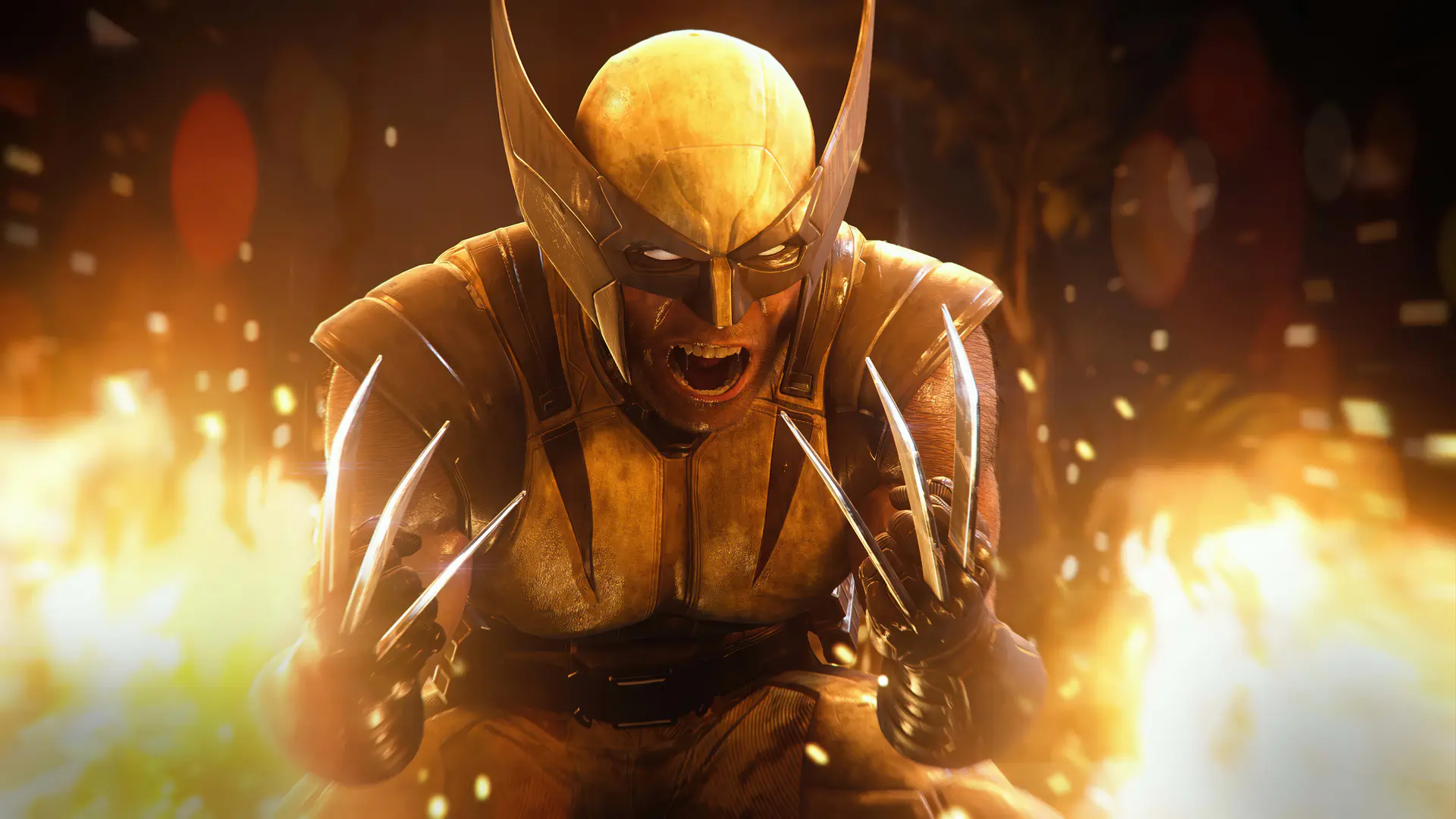
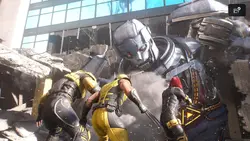
Marvel's Wolverine from Insomniac Games has had a rough road. Even before release, the internet was buzzing with complaints. People disliked the character designs, the linear structure, the repetition, and plenty of other things. The developers themselves did not exactly help matters either, repeatedly talking about how comments like these hurt team morale and made people feel discouraged. But what about the game itself? Players and journalists ended up divided. If you still have not made up your mind, I'll explain whether this new version of Logan is worth your money and why almost nobody understood what Marvel's Wolverine is really about.
Production Troubles
Ever since it was announced, Insomniac's project raised plenty of questions. Would Logan be an interesting protagonist? Would there be any connection to Spider-Man? How open, or not-so-open, would the world be? The developers remained completely silent for a long time until a sizeable chunk of gameplay suddenly leaked online. Yes, it was obviously unfinished, but the core ideas were already visible. People were genuinely confused by the sluggish combat and corridor-like locations with little in the way of obstacles or meaningful traversal.Image unavailableThe controversy eventually died down, and Insomniac quickly reassured concerned fans that release was still far away, the project was nowhere near finished, and plenty would change. As you probably already know, it did not. To be fair, nobody was ever going to rebuild the entire game from scratch. Still, the community reaction should have shown the studio that some of its ideas needed adjustment. A few reports did surface over time. Jean Grey's appearance, for example, was redesigned, while gameplay sections in which she was supposedly playable were allegedly removed. At the time, people were happy about that because hardly anyone had fond memories of the infamous Mary Jane stealth missions in Spider-Man. In the end, though, removing those sections may have been one of the worst decisions made for the upcoming blockbuster.Sweet Baby Inc.'s involvement in development only added more fuel to the fire. Sweet Baby Inc., a company associated with consulting on narrative choices, representation, and inclusivity, has had a rough few years. Working with it became deeply unpopular in parts of the gaming community, to the point where simply seeing the company's name attached to an upcoming release could trigger a backlash before anyone had even judged the quality of the game itself.Image unavailableWhen development on Wolverine began, however, the situation was very different. I will not dive too deeply into the subject, but Sweet Baby Inc. had become involved with a large number of major projects. To critics, this looked like an industry-wide obsession with filtering creative ideas through modern expectations around diversity, representation, and sensitivity in order to avoid offending anyone.It is not hard to understand why a large part of the gaming community rejected that approach. The push to work with companies like Sweet Baby Inc. often seemed to come less from rank-and-file developers and more from investors and executives, where the presence of certain themes, relationships, or character archetypes could be treated as a way to satisfy corporate requirements and secure additional support. The quality of the final product or preservation of the original creative vision did not always appear to be the priority.Image unavailableThe beloved Spider-Man duology went through similar collaboration, and the internet has long since dissected the results in microscopic detail. With Wolverine, however, Insomniac went further. Shortly before release, the narrative director said in an interview that there was a deep emotional connection between Wolverine and Sabretooth, with an apparent sense of "yearning" between them, whatever that was supposed to mean. Predictably, players exploded with anger. Wolverine's marketing campaign probably deserves a place in textbooks under the heading: "How Not to Do It."I am telling you all of this so you can better understand the exact circumstances in which Marvel's Wolverine was created and what influenced the way players reacted to the final release. Since I decided to look at Logan's adventure without taking sides, it is important to understand the chain of cause and effect: what is merely reaction, and what is actually present in the game.Image unavailableNow that the game is out, players have split into three camps. The first believes the game is excellent and delivers exactly what was promised. The second is more restrained: Insomniac's project is decent, but nothing exceptional. The third continues to drag Wolverine through the mud, cursing the developers, Sony, and Sweet Baby Inc. for putting their ideological fingerprints on the project. All three groups are fighting with almost fanatical intensity and barely listen to one another's arguments.I finished the entire game, so I can at least evaluate where each side is coming from. Let's figure out whether Sony's new exclusive is really that bad, where all that supposed yearning actually is, and why this is not quite a game about Wolverine.
A Game That Plays Itself
I want to start with the biggest complaints. Supposedly, Marvel's Wolverine plays itself, leads the player by the hand through linear levels with blue smoke, and forces you to sit through sections where you barely need to press any buttons. To analyze those claims properly, it is worth asking a basic question: what kind of character is Logan? What are his superhuman abilities? First and foremost, of course, regeneration and claws. His claws were originally bone, but after a series of procedures and mineral baths, Wolverine's entire skeleton became coated in adamantium, an extremely durable metal. Logan is also, in many ways, an animal inside a human body. He has exceptional sight, enhanced stamina, and an extremely powerful sense of smell. In other words, Wolverine can literally track a scent.Image unavailableAnd that raises a question. If the protagonist of your game has an incredibly sensitive sense of smell, how do you represent that through gameplay? Obviously, you have to visualize it somehow. If the ability were removed entirely, fans would complain. That makes the visible scent trail almost a necessity, because without it one of the most famous mutants in Marvel would feel incomplete. Should the developers be criticized for including it? I do not think so. Could it have been implemented differently? Absolutely.The scent trail only appears a few times across the entire game, which is strange for exactly the reasons I just described. If you introduce an ability, you should not switch it on and off whenever the story feels like it. It should stay with the character. Incidentally, a recent patch added the option to disable the feature entirely. Wolverine may not be able to see through walls, but he should certainly be capable of sensing how many threats are nearby through some kind of visual indicator. The game already has something similar anyway.Image unavailableThe simplest solution would have been to map Enhanced Senses to a dedicated button and let the player decide when to use it. Amusingly, the game already has a guidance button. Press it and a large indicator appears on screen showing where Logan needs to go next. But it has nothing to do with his sense of smell. Why not combine the narrative crutch and the gameplay ability into one mechanic? That should probably have been one of the first questions asked while designing the system. It would solve almost everything. Want help? Use Logan's senses and head straight toward the objective. Do not want help? Navigate using your own eyes.As for the now-famous motorcycle sequences where you can supposedly complete them without pressing anything, yes, those sections exist. But the situation is a little more complicated. You can die by crashing into oncoming traffic, and it can happen pretty quickly. Similar sequences also appear in plenty of other games, such as Resident Evil Requiem. I understand that players expected something closer to Uncharted 4: A Thief's End, but developers often use sequences like these as entertainment breaks that slightly change the usual gameplay, essentially interactive cutscenes. I do not see it as some huge tragedy, especially since they make up a very small portion of the game.Image unavailableWhat does raise questions is the complete lack of a wow factor. Logan rides forward, drives up a hill, jumps, rides some more, and eventually jumps onto a truck. Things change slightly once you reach Tokyo because the protagonist is being actively pursued, so you occasionally have to fight back, swerve into oncoming traffic and... that's about it. If you are going to create fun set pieces, make them genuinely crazy, especially when there are obvious examples to learn from, including that same Resident Evil.The infamous QTEs are a much bigger problem. There are not that many of them, but most seem to exist for no clear reason. Even pressing the wrong button often has no effect on the outcome. The game either freezes completely and waits for your input or continues with only minor differences. Yes, the animation may change depending on whether you succeed or fail, but the final result is usually identical. If Wolverine is trying to flip a truck using a hook and cable, that truck is getting flipped no matter what.Image unavailableIn my view, that is a major mistake. People defending the game often say something like, "Well, this isn't Until Dawn." Fair enough, but QTEs are an opportunity to add variety to otherwise passive gameplay and give the many cinematic scenes more weight. They are essentially another form of that motorcycle sequence, something the game could technically have done without. Players are not idiots and immediately notice when button prompts are simply pasted onto a movie. If the movie continues regardless of what you press, why are the buttons there at all?Make the button prompts matter and suddenly it is no longer just a movie, but part of the gameplay. Rewarding successful QTEs would also have been a good idea. That could mean experience, since Wolverine does not really have another progression resource, or something else entirely. And yes, I genuinely believe there should have been far more of these challenges, especially during action scenes where the most exciting things often happen while the player sits there as a passive observer.Image unavailableFunny enough, there are still two or three moments in the game where missing a button press absolutely does mean death and a reload. So the developers clearly had some internal distinction between "safe" QTEs and dangerous ones. It is just almost impossible to understand that logic from the outside.The conclusion here is pretty simple. Most of Insomniac's ideas surrounding Wolverine's abilities and interactivity are good. The game does not always force you to be a passive spectator, and visualizing his sense of smell is completely justified by the lore. The problem is that every one of these systems, whether Enhanced Senses, QTEs, or scripted chases, has serious flaws. You do not need to be a famous developer or journalist to notice them. Predicting the public reaction is even easier. Players are used to a Sony exclusive being a certain mark of quality. In these particular areas, unfortunately, Wolverine falls well short of that standard.
A Suffocating Highlight Reel
Maybe the gameplay carries the entire 14-hour runtime, then? If you play only the first two or three hours and rush to publish a review, perhaps. You will probably say you do not understand the hate, that Wolverine is fun, and that it delivers a colorful spectacle worth the price. But if you spend the full 14 hours with it, your opinion may change.Image unavailableAt its simplest, the entire game is split into two unequal parts: walking around and fighting. You will fight constantly, endlessly, and against essentially the same pool of enemies. That repetition becomes exhausting. Yes, I know the obvious response: in The Last of Us, you also mostly walk and shoot, and that is still a great game. But again, the devil is in the details.At a basic level, Wolverine has a light attack, a heavy attack, several abilities, a couple of combos, and a Rage meter. That is the whole arsenal for 14 hours. In combat, Logan parries, builds enemies' stagger meters, and dodges unblockable attacks at the right moment. If you play a lot of games, you immediately recognize the setup. It is familiar to the point of being almost trivial.Image unavailableAs the game goes on, Logan levels up and unlocks new abilities and attacks. There are not many active skills, but there are more than you can equip at once in the quick-access menu. Passive upgrades specialize the basic two-button combo and make it more situational. At first, you can simply carve up a staggered enemy. Later, you can carve them up with a healing strike, throw a villain into a crowd, leap onto them from above, and perform variations on the same theme.The problem is that, as I said earlier, the enemies mostly change only in appearance. They gain additional properties, such as invisibility or teleportation, but the way you defeat them stays essentially the same. Every fight consists of the same sequence of actions repeated again and again. After two or three hours, you will probably settle on a basic strategy that is both the most effective and easiest for you personally to remember. Because the enemy roster is so repetitive, there is little motivation to memorize new combinations or conditions. You can finish the entire game using what you learned at the beginning. Your options expand, yes, but there is almost no reason to use them.Image unavailableSo while other games constantly introduce new situations, weapons, or attacks, Wolverine mostly lets you slice a villain vertically or slice them while spinning. These are not the elaborate multi-stage combos you would expect from a character action game like Devil May Cry. The system is closer to the recent God of War games, only much more limited.One important mechanic that improves the situation a little is Rage. The Rage meter constantly fills during combat. You can spend it on regeneration or a special mode. Reach the third level and Berserker mode activates, letting Wolverine cut through another group of ninjas in a single hit. Well, not always and not everywhere, but those technical issues are something we'll get to shortly. Rage lets you end an overlong fight quickly, and honestly, it feels like a breath of fresh air. The fights drag on so much that sometimes I wished I could set the game speed to ×2, and that is before we even get to the bosses.Image unavailableThe bosses are quite fairly regarded as the weakest part of the game. They offer no real challenge, no real excitement, and certainly nothing you could call a memorable hook. They are essentially the same regular enemies, except their standard attacks behave slightly differently and their health bars are much... no, MUCH larger than any reasonable limit. Some bosses can take half an hour of real time to wear down. What happens on screen is basically: parry, parry, parry, quick-attack combo. Repeat until finished. Only the final boss stands out a little, and even that encounter could have been dramatically improved.This kind of gameplay will definitely appeal to some people. You do not need to study anything or think too hard. Press a couple of buttons with a drink in hand and go to bed. Why not? But that audience is not necessarily the one capable of giving a major new Sony exclusive the popularity and commercial success it needs.Image unavailableThe second component of the gameplay is walking. Wolverine either walks around locations interacting with things, or runs while jumping across ledges, obstacles, and gaps. The former is normal enough for a Sony game and, in moderate doses, even helps the atmosphere. The latter clearly did not work. Again, though, there are caveats.We have already done this once, but let's again remember what kind of character Logan is. He does not have webs, wings, or anything similar. He is simply strong and durable. How do you build traversal around that? Mostly by running and jumping for a long time. Can that be made interesting? Honestly, I am not even sure. These are basic mechanics in most action games, but every studio tries to vary the process somehow. Wolverine occasionally tries too, yet its parkour sections differ from ordinary running mainly because you press the jump button. It is not entertaining, not intriguing, and certainly does not help the core gameplay become more memorable. Spider-Man was in a far better position, but that is not really Insomniac's achievement. The character simply comes with better movement options.Image unavailableThis is the first point where the thought appears that Logan may simply not have been the right character to carry the entire game. He works extremely well as a second playable hero, but perhaps not for all 14 hours. That is where those reports about Jean Grey's playable sections being cut from Wolverine come back to mind. Mary Jane with her absurdly effective gun may have looked ridiculous, but Jean is an entirely different situation. She has an enormous range of abilities. Her progression could have branched in multiple directions, and her gameplay naturally supports flight. If the 14-hour runtime had been split evenly between Logan and Jean, with their levels mixed together, the game would have felt far more substantial and complex. It is a simple solution, but perhaps the one thing that could have transformed Wolverine from a merely average game into a genuinely great one.To be fair, I was one of the relatively few people who never adored the Spider-Man duology either. I think the same problems were already there, except the studio had chosen a character who naturally masked them. Repetitive combat and a billion side quests whose main objective was simply to beat everyone up appeared in both Peter Parker games. Because of their scale, I would lose any desire to clear the map by the end and force myself toward the credits.Image unavailableSpider-Man at least had gadgets, plus stealth that allowed you to stretch webs between almost any points in the environment. That turned standard arenas into little sandboxes where the player could experiment. And, of course, there was web-swinging. It is more than simply running forward, even if it is not dramatically more complicated from a mechanical standpoint. The most dedicated players could even choose a more realistic traversal setting where Parker could die from a fall and had to swing in ways that respected the physics. Again, though, most of these ideas come from the character himself rather than the developers. Logan presented a much harder design challenge.Broadly speaking, Insomniac did the same thing in Wolverine that it has always done. This time, however, the hero worked against that formula. Playing as Logan is repetitive and, frankly, tiring. Yes, some people will enjoy it, but pressing two buttons and running back and forth does not magically make a great game. The Spider-Man duology suffered from something similar, but the scope of that character's abilities saved the experience. The developers should have understood this, which is why removing the Jean sections feels like the biggest mistake. I seriously doubt the budget made a second playable character impossible. There is obviously a reason, but the public will probably never hear it. In its current form, the gameplay is arguably the weakest part of the game.
Marvel: James
Before delivering a verdict, we need to discuss the last major elements: the story, visuals, and technical execution. At first glance, the game looks perfectly pleasant. Nothing extraordinary, but solid enough. Character faces are detailed, there are plenty of effects, and arenas contain lots of destructible objects. Look closer, though, and things are not nearly as rosy. Again.Image unavailableCharacters often move unnaturally, as though poor animations were attached to otherwise finished models. Lip sync regularly misses the dialogue. Jean can suddenly freeze in a T-pose for a couple of seconds. Logan sometimes slams into empty space or misses a jump and gets stuck in geometry. The levels themselves are corridor-like and do not offer much to do, yet it can still be surprisingly difficult to understand where the game wants you to go.There are plenty of visual markers, as mentioned earlier, but mistakes appear in more fundamental parts of the level design. You see a line of train cars, with the last one standing very close to a platform. Naturally, you want to jump onto it. Everything in the scene seems to lead you there. In reality, Logan is supposed to climb a completely different wall, marked with white paint against a light gray background. It is almost embarrassing to talk about tunnels and streets blocked by invisible walls. Simple forest textures or other clearly impassable elements could have hidden those boundaries far more elegantly.Image unavailableRage also glitches constantly. In theory, once you reach the critical state, enemies should die in one hit because a takedown prompt appears above each of them. Killing opponents this way preserves Rage and effectively closes the loop, turning Wolverine into a perpetual engine of blood and meat. In practice, the finisher prompts appear and disappear unpredictably. Sometimes you still need to hit an enemy a few times before performing the "fatality." Naturally, normal attacks drain Rage quickly, your efficiency collapses, and Berserker mode ends before it has properly begun.The designs of the main characters are controversial. Jean looks normal. She is neither conventionally glamorous nor the strange-looking figure seen in the leaked footage. She simply looks like an ordinary woman in her forties. It is interesting whether the developers really intended that age. Most of the others are fine as well. But Logan. Logan looks awful. He constantly wears an apologetic expression and a guilty stare, he lacks confidence, and around other people he often behaves like a child who does not fully understand what is happening. After living another 30 years, on top of at least a century and a half before that, he remains naive, easily led, and helpless. Wolverine has rarely been portrayed as less masculine. The dissonance is especially jarring because, once he puts on the suit and enters a mission, the mutant tears enemies apart, screams, and generally behaves exactly as you would expect. Then a cutscene begins, and he becomes a completely different character. Many people have already pointed this out, but the live actor who performed Wolverine for motion and facial capture somehow looks more rugged than the in-game version of the same performance.Image unavailableThis brings us to the most important part: the story, and why I think most journalists and players may not have understood what Insomniac was trying to do. Logan has lost his memory yet again. A man named Nathaniel Essex finds him in the forest and brings him back to civilization so that he can live at a sort of alpha version of Professor X's school and help other mutants. Then 30 years pass. At this point, anyone familiar with the comics should already understand the game's main twist and the identity of the real villain, but I will not spoil it in case you do not.After all that time, Logan behaves as though his memories only returned yesterday. The mutant roster has not expanded much either. We have an older Mystique, Sabretooth, and an inventor-scientist named Walter who, for some reason, decided that his mutant gene was dormant. Where all the other characters went, or whether they exist in this world at all, is unclear. Before long, Logan finally discovers a group of mutant children protected by Jean Grey and her African American friend, played by that same actress who seems to appear in every progressive game, Debra Wilson essentially playing herself.Image unavailableThe villain of the first half is Bolivar Trask, another well-known figure from the comics, famous for creating the extremely difficult-to-kill Sentinel robots specifically to hunt mutants.I first began to suspect something was off when people kept calling Logan "runt." Sabretooth, naturally, was among them, so I watched his behavior especially closely. Remembering the narrative director's comments, I kept looking for signs of that supposed yearning and whatever else was supposedly going on between Logan and Victor, only to find nothing.Image unavailableAlmost every character except Wolverine himself and Jean is made of cardboard. They have nothing beyond a single defining trait and a visual design borrowed from the original comics. Wolverine has maybe four meaningful conversations with Sabretooth, and there is no yearning there, not even much evidence of friendship. Only near the finale does Victor suddenly say that Logan always runs away but never takes him along, and that Jean destroyed their family. Where did that come from? What was it even supposed to mean? The line appears without setup or development. That is poor character writing, and there is no meaningful deep bond to speak of. You simply do not care about the fate of almost anyone except, once again, Jean.But the game is not really about them. In reality, the entire story is a very deep love story between two people, Logan and Jean, except most of that depth apparently exists somewhere off-screen. At least here it matters. Jean confidently competes with Wolverine for the role of protagonist and, frankly, suits it much better. She has an internal arc and clear stages of development, while Logan either remembers nothing or remembers everything and refuses to talk about it.Image unavailableThe key line that changes the way the whole story can be read comes near the end, when Grey looks directly at Logan and tells him that he is not Wolverine and not Logan, but James. For anyone unfamiliar with the character, James is his actual first name. I think this scene explains the creators' entire approach. They were not trying to make a game about the rough-on-the-outside, sensitive-on-the-inside hunter with claws. They were making a game about a gentle, confused man who happens to wear the familiar costume but does not truly see himself as that character. The project should almost have been called James rather than Wolverine. It would have been more honest.Once I realized that, the contradictions in this version of the famous hero disappeared and the rest of the story began to make more sense. We are being shown a different person, character, and mutant entirely, neither Logan nor Wolverine in the conventional sense.Image unavailableApocalypse also appears in the game. This creates a funny story inconsistency: at first, none of the characters understands or recognizes the terrifying voice in their heads, and then they suddenly start calling him by name. It feels as if a scene was cut, like in a badly edited movie.I also want to talk separately about the ending, which raised at least as many questions for me as the main story. If you strip away all the details, it becomes difficult to understand why the characters do what they do, or why they do it in that particular way. Either the ending undermines the entire game, or Logan was never really necessary to the story at all. For me, it is one of the weakest endings in recent memory, the kind that makes you wonder whether the developers simply created drama for the sake of drama without thinking too hard about how any of it would be justified afterward. Sometimes a positive outcome really is better.***After finishing the game, I was left with mixed feelings. It is definitely not a bad game, and at times it is even impressive, but absolutely everything in it feels one or two levels below where it should be. Maybe it simply lacked polish, although five years is a long development cycle. Or maybe the developers made exactly the kind of game they knew how to make, only to realize too late that this story was not actually about Wolverine, but about Jean Grey and her James. By then, the announcement had already happened and it was too late to change the title.Either way, this is not a game I would recommend buying at full price. It is worth checking out at a substantial discount, but mainly if you already know X-Men lore well and genuinely care about these characters. Everyone else should understand clearly what the game is offering, both in terms of gameplay and story. If you are prepared to spend 14 hours doing essentially the same thing while colorful cinematic sequences break up the repetition, you may enjoy it. But there is very little depth here, even compared with Spider-Man.
6.5/10
NOWGAME SCOREVerdict
A quick look at the game’s strengths and weaknesses.