No More Room in Hell 2 stands apart from most zombie shooters. The game focuses on realism, strategy, and making every mistake matter. Exceptionally detailed locations only strengthen the oppressive sense of hopelessness and an approaching end. But is the project that nearly buried its own creators actually any good? In this review, I'll break down the key features of one of the most unusual shooters about a virus outbreak and the walking dead, and answer the main question: did it work?
A Troubled Development
No More Room in Hell 2 took much longer to reach release than expected. Development began all the way back in 2016. That was when the modders behind the original free Half-Life 2 modification decided to create a full sequel. The initial plan was to release the game for Halloween 2022, but the date kept slipping. When the project finally entered Early Access in 2024, the result was unexpectedly disappointing.During the first few hours, users posted more than 3,000 reviews, and only 28% of them were positive. Players ran into broken animations, crashes, desync, and matchmaking that simply did not work. After launch, the development team was cut sharply and substantially. For a while, it seemed the project might never reach a full release.Two years passed. Endless patches, hotfixes, and close work with the community eventually paid off. In 2026, No More Room in Hell 2 finally launched. Did it become the game fans were promised ten years ago? Let's find out.
Setting, Atmosphere, and Visuals
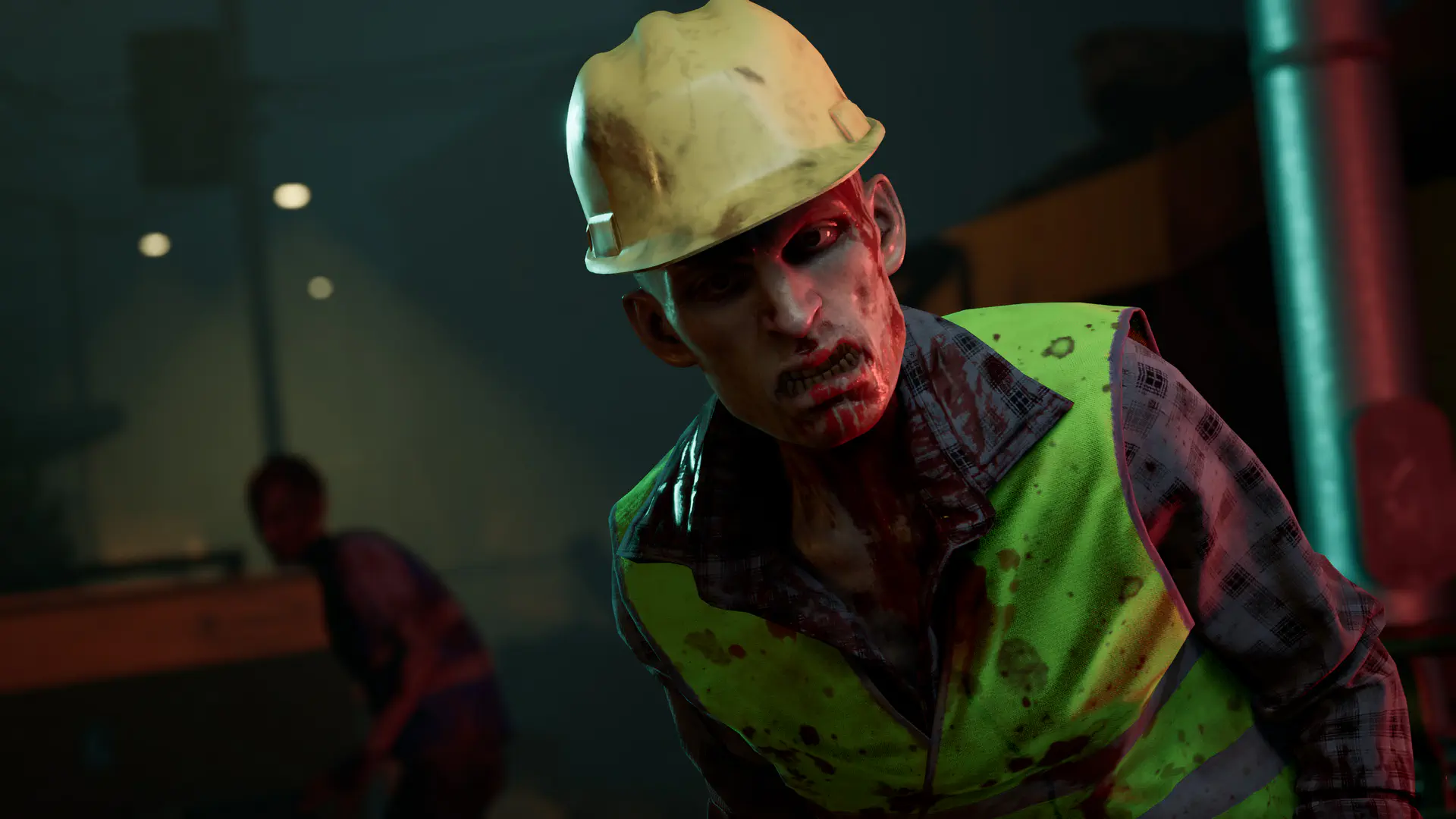
The world has fallen into a zombie apocalypse, and NMRiH 2 treats that as a very real disaster. As part of a group of eight players, you head into infected areas to complete a variety of objectives. In a huge hospital, for example, you may need to recover data about the catastrophe and then evacuate through dark subway tunnels. The monsters are endless, resources are limited, and time is always running out. It strongly resembles an extraction shooter, although the developers themselves do not describe the game that way.Hospital corridors filled with abandoned gurneys and offices with unfinished notes still lying on desks reinforce the feeling of despair and waking nightmare. One of my favorite locations remains the city that lost its fight against the outbreak. Any modern zombie movie could envy scenery this detailed and believable: burning vehicles, trash scattered everywhere, corpses in the streets, and signs of a failed defensive effort.
The maps are packed with small details. Walk into almost any accessible house and you will see traces of everyday life that ended without warning, and perhaps the owners somewhere under a table. Most of the time, they will not be very welcoming and will try to eat you. Make no mistake, that is a serious problem and a genuine threat. This documentary-like authenticity is not accidental. It is a deliberate artistic choice. The game prioritizes believability over spectacle. NMRiH 2 is much closer to horror and does not invite you to mow down zombies for fun. Every location feels like a real place that suffered a sudden catastrophe, while ordinary objects from the old world become incredibly valuable.Image unavailableUnreal Engine 5 is responsible for all this environmental detail, and it generally delivers, although not without compromises. Even now, the frame rate can dip during large-scale scenes. At the same time, shadows, blood trails, severed limbs, and exposed gore can look almost photorealistic. Fog over the fields, flashes of fire, and the changing time of day are rendered beautifully. They do a lot to create the right mood. Still, this level of visual quality is not available to everyone. On mid-range PCs, the game is frankly poorly optimized.Image unavailable
The Joys of Hardcore Survival
The game opens with a menu where you choose your Responders. They are fully under your control, but you can eventually run out of them because, from a certain point onward, character death becomes permanent. As a Responder levels up, new slots for useful perks become available. The number of perks you can choose from grows along with your account progression. Over time, a proper build starts to take shape. It will not make your character immortal, but it can significantly improve their odds of survival. One durable Responder might swing a two-handed length of rebar like a battle monk, while another may be better at resisting illness.
Infection is another excellent mechanic. The higher the difficulty, the greater the chance of eventually becoming one of the brain-eaters yourself. Even if you are very good at shooters, sooner or later a zombie will land a hit. At that point, all you can do is hope the infection did not spread to your character. After a while, the Responder may start coughing, hallucinating, and hearing mysterious voices. The visual and audio effects of the disease make the horror even more intense and create a constant feeling that the end is getting closer. The game gives you three ways out of this situation:
Keep completing objectives and actively search for pills. They delay the transformation, and ideally you should carry three or four containers of medication.
Find a gene therapy cure that completely removes the infection. The important part is using it in time, because you may not get another chance.
When the option becomes available, shoot yourself. Yes, you can simply sacrifice your character to avoid putting your teammates at risk.
Of course, you came here to play a first-person shooter, and NMRiH 2 will gladly let you shoot things, just not very often.
Notably:
despite the large arsenal of pistols, assault rifles, submachine guns, shotguns, and rifles, ammunition on each map is strictly limited.
You also need to remember that seven other Responders are running around the map, and they need ammunition too. Unsurprisingly, ammo comes in different types and calibers. It is not a universal pile on the floor that magically reloads your entire arsenal. Each type is a separate item that takes up inventory space.Your bag is organized as a radial menu, and in addition to weapons you need to carry medkits, grenades, ammunition, pills, and plenty of other supplies. Boards for temporary fortifications also take up inventory space and can help you defend important objectives. On one of the city maps, for example, it makes sense to barricade access points to a shop containing an objective laptop. While your teammates search the surrounding area for supplies and the required hard drives, you can secure the key location.Image unavailableThere is also a solid selection of melee weapons. One-handed options include hammers, knives, and pipes. Two-handed weapons hit much harder but consume stamina aggressively. There is no single ultimate piece of gear that solves every problem. You constantly have to choose whether to fight or run as far away from the zombie horde as possible.
It is important to know that melee gear comes in different quality tiers and does not break. If you find a good rare item, you can keep it permanently.
Synergy and Co-op
Remember that eight Responders are operating in the mission zone? The maps are huge and packed with different objectives. You can think of them as quest chains, just without NPCs. The closest comparison is Helldivers 2. Responders spawn in different parts of the map and quickly move toward the locations marked by the mission. You need to understand which objective is best to complete first, whether you have enough resources, and whether your gear is suitable for the job. Thankfully, the hardcore approach does not extend to map navigation. Tarkov players can breathe easy. Every objective, your own position, and your teammates are clearly marked and visible.A standard match looks something like this: you grab useful items while moving and head toward the nearest objective as quickly as possible. Once it is complete, you can unlock the next stages. Meanwhile, teammates on the other side of the map search residential areas for important components. Once the nearby objectives are finished, everyone joins forces somewhere near the center. The game is built around a large group staying active, and that is something you need to understand from the very beginning.
The infection mechanic becomes especially interesting in an eight-player group. Other Responders can see your condition and may share pills, heal you, or simply leave you to die. You can and should ask for help through voice or text chat. Communication is one of the most important parts of the game. If monsters knock you down, some kind soul may revive you and leave a little medicine behind. Assuming you ask nicely. Or maybe they will not, and you will die, permanently losing a character you spent time developing. Being nice in this game gives you an extra hit of dopamine, but it is definitely not a requirement for winning.Other players are also the source of No More Room in Hell 2's biggest problem. The barrier to entry is not especially high, particularly with adjustable difficulty. Even so, you still need to play through a map two or three times before you remember what needs to be done without wasting time figuring out mechanics or performing pointless extra actions. Experienced players on low and medium difficulty, however, tend to rush ahead and complete objectives as fast as possible. They are no longer interested in soaking up the atmosphere or checking every corner. That seriously hurts the experience for newcomers, who end up frantically chasing veterans instead of exploring and often have little idea what is actually happening.
Conclusion
No More Room in Hell 2 is a rare example of a game surviving years of delays, negative reviews, and team cuts before eventually becoming what fans were originally promised. Yes, the project is not perfect. Optimization remains a weak point, and the heavy emphasis on communication may put some players off. But those drawbacks fade next to its more tangible strengths.Image unavailableThe hardcore design is not there simply to make the game difficult. It exists to create atmosphere. Permadeath, infection, limited resources, and the need to negotiate with real people turn every match into a story you want to tell your friends. This is not a zombie shooting gallery where mowing down hordes is the whole point. It is a survival game where one wrong move can be your last. For fans of cooperative shooters built around realism and teamwork, No More Room in Hell 2 is a real gem.
6.5/10
NOWGAME SCOREVerdict
A quick look at the game’s strengths and weaknesses.
Pros
Believable and atmospheric setting
Co-op as the foundation of the gameplay
Meaningful hardcore mechanics
Well-judged character progression
Enjoyable combat with meaningful limitations
Cons
Poor optimization
A learning curve that can be difficult to overcome without help