Hacking in Cyberpunk 2077 was heavily redesigned in Update 2.0, so many launch-era guides now mix together systems that no longer work the same way. Breach Protocol is no longer a combat opener that you upload to human enemies before a fight, while quickhacking now revolves around Cyberdeck RAM, quickhack queues, Overclock, device control, and the rebuilt Intelligence perk tree. The familiar code-matrix minigame still exists, but it is mainly used for Access Points and encrypted shards rather than for weakening an entire enemy network. This guide explains how the current hacking system works in the modern version of Cyberpunk 2077, including cameras, turrets, Access Points, shards, RAM, and the most useful netrunner perks.
What You Need to Use Quickhacks
To quickhack enemies and devices, V needs a Cyberdeck installed in the Operating System cyberware slot. Open the scanner, point it at a compatible target, and switch to the Hacking panel to see the quickhacks available for that enemy, camera, turret, vehicle, or other device. Every quickhack has a RAM cost, and the available RAM is shown in the scanner interface before you upload anything. RAM regenerates automatically, while better Cyberdecks and Intelligence perks can increase capacity, improve recovery, reduce costs, or provide additional effects.A Cyberdeck also determines how many anti-personnel quickhacks you can equip and which device functions are available. Device quickhacks such as Remote Deactivation and Take Control are built into the Cyberdeck system, while anti-personnel quickhacks such as Overheat, Short Circuit, Reboot Optics, Memory Wipe, and Cyberpsychosis are found, crafted, and slotted into the deck. If you replace the Cyberdeck with Sandevistan or Berserk, you lose normal quickhacking because all three systems use the same Operating System slot. This is the first thing to check if the scanner suddenly shows information about enemies but no quickhack options.
How Quickhacking Changed After Update 2.0
The biggest change is that Breach Protocol can no longer be used on human enemies as the universal first step of a netrunner build. Before Update 2.0, players commonly breached an enemy network, uploaded daemons, reduced quickhack costs, and then attacked everyone connected to that subnet. CD Projekt Red removed that combat use and rebuilt netrunning around direct quickhacks, RAM management, combinations, and queues. The name Breach Protocol still appears in connection with the code-matrix minigame, but you should no longer think of it as a mandatory pre-combat action.Modern netrunning is much more immediate. A Combat quickhack such as Short Circuit or Overheat deals damage, Control hacks interfere with weapons, cyberware, vision, or movement, and Covert hacks help with stealth and detection. Ultimate quickhacks provide expensive high-impact effects, while cameras, turrets, doors, environmental devices, and vehicles use their own contextual hacks. This means the best action depends on the target rather than on one universal network-wide sequence performed before every encounter.
Where to Find Shards and How to Decrypt Them
Shards you collect are stored in the Journal under the Shards section rather than as ordinary equipment in the Backpack. Most shards are simply documents that you can open and read, but some are encrypted and display an additional option such as Crack Security. Selecting that option launches the Breach Protocol code-matrix minigame, and successfully completing the required sequence decrypts the hidden text or grants the reward associated with that shard. Not every shard is hackable, so the absence of a decryption button does not mean you are looking in the wrong menu.Encrypted shards are used in several quests and optional activities, and the exact reward depends on the item. Some reveal information needed for a job, while others can provide eurodollars or another benefit once the security is broken. The hacking rules are the same basic rules used at Access Points, so learning the matrix once covers both systems. If you only need to read a normal shard, however, there is no hacking step at all.
How the Breach Protocol Code Matrix Works
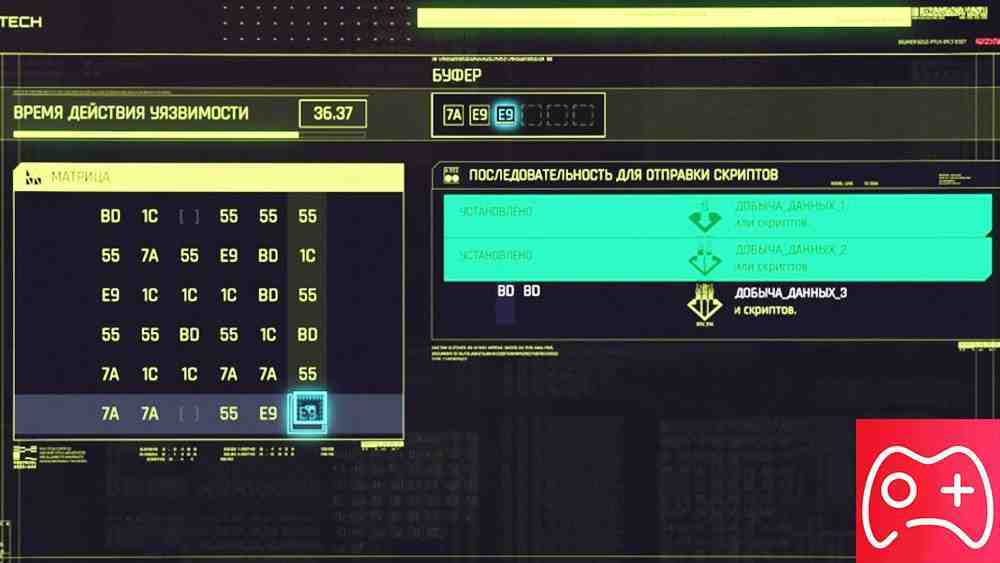
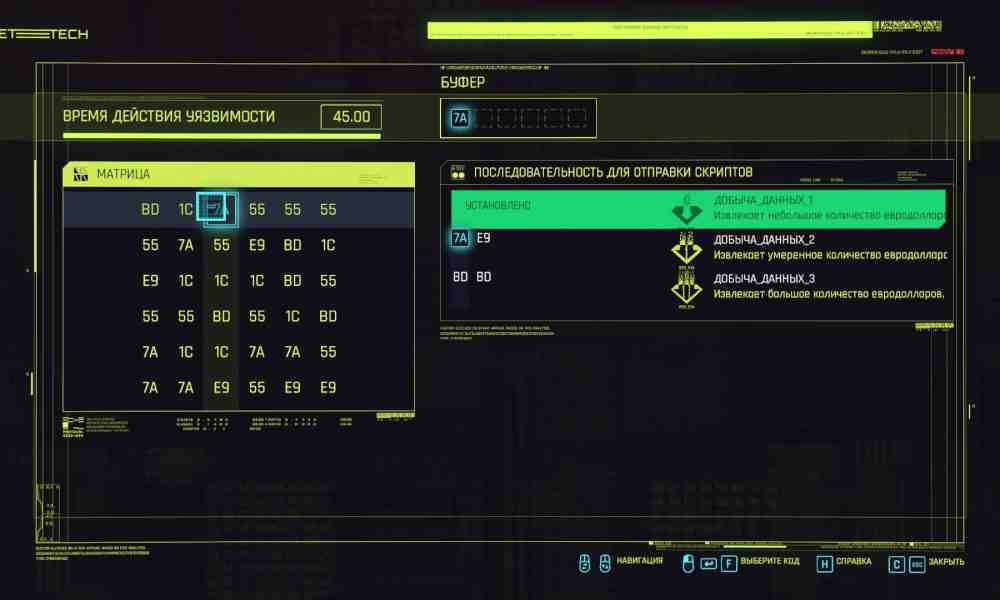
When Breach Protocol starts, the screen shows a grid of hexadecimal-style codes, a limited buffer, and one or more target sequences. Your first selection must come from the highlighted horizontal row, after which the game forces you to choose from the corresponding vertical column. The next choice switches back to a horizontal row, then a vertical column again, and the pattern continues until the buffer is full or the required sequences have been completed. Planning the route before choosing the first code is important because the available direction changes after every selection.Breach Protocol Code Matrix in Cyberpunk 2077Breach Protocol Code Matrix in Cyberpunk 2077The timer normally begins after your first selection, so you can study the matrix before committing to a route. Update 2.1 added an accessibility option that can remove the time limit from the hacking minigame entirely, which is useful if you prefer solving the puzzle without pressure. Go to the Accessibility settings and enable the option that removes the Breach Protocol timer. The puzzle itself remains unchanged, so this setting only removes the need to rush.Several target sequences can sometimes share the same codes, allowing one route to complete two or even three Datamine objectives. Look for overlaps before clicking anything and work backward from the reward sequences if the matrix is complicated. It is not always possible to complete every target because the generated grid and buffer can force a choice between rewards. In that situation, prioritize the higher-value Datamine sequence rather than wasting buffer space trying to force an impossible route.
How to Hack Access Points
Access Points are physical network ports found throughout Night City in offices, gang hideouts, shops, warehouses, and mission locations. Approach the terminal and connect with V's Personal Link, provided you meet any Intelligence requirement shown by the device. This launches the same Breach Protocol matrix used for encrypted shards, but successful Datamine sequences can award eurodollars, quickhack crafting components, crafting specs, and sometimes quickhacks. Because vendors no longer sell quickhack crafting components after Update 2.0, Access Points are particularly valuable for characters who regularly craft and improve their hacking arsenal.Higher-tier rewards become more useful as V progresses, so it is worth checking Access Points even if you are not playing a pure netrunner. The Eye in the Sky perk at 4 Intelligence automatically highlights nearby Access Points and cameras, making them much harder to overlook while scanning an area. Forcekill Cypher, also available in the early Intelligence tree, shortens the required Access Point sequences by one character without reducing them below two characters. These perks turn what would otherwise be optional terminals into a reliable source of money, components, and netrunner progression.
How to Hack Cameras
Security cameras are among the most useful devices in the game because they can be disabled, manipulated, or used as remote observation points. Scan a camera with a Cyberdeck equipped and use Remote Deactivation if you simply want it to stop detecting V, or use a control option to take over its feed. Once connected to a camera, you can rotate it, mark enemies, inspect the room, and in many situations upload quickhacks to targets visible through the camera network. This lets a netrunner clear or disrupt guarded rooms without physically entering them.The rebuilt Intelligence tree makes camera-based hacking even stronger. Eye in the Sky reduces the RAM cost of Control and Covert quickhacks uploaded through cameras by one and increases their duration by 50 percent, which is especially useful for stealth builds. Cameras can also become tools rather than obstacles when Friendly Mode is available, because the device can be made to recognize V as an ally instead of an intruder. The best choice depends on whether you want complete stealth, information gathering, or active support during combat.
How to Hack Turrets and Other Devices
Turrets can be handled in several ways depending on the Cyberdeck and the contextual quickhacks available. Remote Deactivation shuts a turret down, Take Control lets you operate supported devices remotely, and Friendly Mode can make hostile security treat V as authorized while targeting enemies instead. Some devices also support Initiate Overload, which destroys the target and can hurt nearby opponents, while ordinary environmental machines can often be hacked with Distract Enemies to pull guards away from their positions. These options make device hacking useful even for a character who does not rely on Combat quickhacks for direct damage.The environment is therefore part of the netrunner's weapon set. Vending machines, screens, speakers, lights, shutters, explosive equipment, and other networked objects can create distractions or open safer routes through an encounter. A camera can reveal a guard, a nearby machine can lure that guard away, and a turret can then be disabled or turned against the remaining enemies. Good netrunning is less about repeatedly casting one damaging hack and more about combining the network around the target with V's equipped quickhacks.
How to Hack Enemies and Use Quickhack Queues
Scan an enemy and choose one of the anti-personnel quickhacks installed in your Cyberdeck. Uploading the hack consumes RAM, and stronger quickhacks generally cost more or take longer to upload, although Cyberdeck effects and perks can change both values. The old Breach Protocol step is unnecessary because Update 2.0 removed the ability to breach human enemies before attacking them. You can immediately use a Control, Covert, Combat, or Ultimate quickhack as long as you have the RAM and the target is valid.At 9 Intelligence, Hack Queue allows you to place two quickhacks on the same enemy so they upload automatically in sequence. Later perks expand the queue further, reduce RAM costs under certain conditions, and increase upload speed, while Queue Mastery at 20 Intelligence can increase the maximum queue size again. This system is central to current netrunner builds because many quickhacks gain extra value when combined in a deliberate order. A Control or Covert effect can weaken or disable a target before a damaging hack executes behind it.
How Overclock and RAM Work
RAM is effectively the resource bar for quickhacking. Each upload consumes a specified amount, and V cannot normally start another hack if there is not enough RAM available for it. Intelligence, Cyberdeck stats, cyberware, and perks can increase maximum RAM or improve regeneration, while some perk combinations return RAM when queued hacks finish or an enemy is neutralized. Efficient netrunner builds therefore focus just as much on sustaining RAM as they do on increasing raw quickhack damage.At 15 Intelligence, the modern perk tree can unlock Overclock. While Overclock is active, V can continue uploading quickhacks even after available RAM has been exhausted, with the missing RAM effectively paid for using Health instead. The mode lasts for a limited time and has a cooldown, so it is designed for bursts of extremely aggressive netrunning rather than permanent use. With the right healing, RAM recovery, and queue perks, Overclock allows a dedicated build to hack several enemies in rapid succession without waiting for the normal RAM bar to refill.
Which Intelligence Perks Are Best for Hacking?
The modern Intelligence tree is much more useful than the old launch-era split between Breach Protocol and Quickhacking. At 4 Intelligence, Eye in the Sky is excellent for exploration because it highlights Access Points and cameras, while Optimization improves RAM recovery and Forcekill Cypher makes Access Point puzzles easier. At 9 Intelligence, Hack Queue changes combat substantially by allowing multiple uploads on one target, and the surrounding perks improve RAM recovery and interactions between different quickhack categories. At 15 Intelligence, Queue Acceleration and Overclock become major build-defining upgrades, while the highest Intelligence tier further improves queue-based combat.Intelligence also affects more than traditional netrunning. The Carhacker perk unlocks vehicle quickhacks, allowing V to remotely use effects such as Emergency Brake, Floor It, Take Control, or Self-destruct when the installed Cyberdeck supports them. This gives Intelligence builds options during vehicle chases and open-world combat that did not exist in the launch version of the game. If your goal is a dedicated hacker, Intelligence should therefore be treated as the core Attribute rather than as a small utility investment.
Where to Get Quickhacks and Quickhack Components
Anti-personnel quickhacks can be obtained from Access Points, enemy netrunners, loot, and crafting once the appropriate crafting specification is available. Update 2.0 changed the economy so vendors no longer sell quickhack crafting components directly, making hacking and loot much more important sources of materials. Duplicate quickhacks can also be broken down for components, which is useful once you start finding versions you no longer need. As V's level rises, higher-tier quickhacks and crafting opportunities become available.Before crafting something expensive, check which Tier your current Cyberdeck supports and whether the new quickhack meaningfully improves your build. A pure stealth netrunner may value Memory Wipe, Sonic Shock, Ping, and Reboot Optics very differently from a combat build centered on Short Circuit, Synapse Burnout, Contagion, or Overheat. Ultimate quickhacks are powerful but expensive in RAM, so they are usually most effective on characters built around strong RAM recovery or Overclock. The current system rewards choosing a coherent loadout rather than installing the most expensive hacks simply because they have a higher Tier.
Why Does Hacking Sometimes Start a Trace?
Many offensive quickhacks are traceable. Once a hostile network begins tracing V, a progress indicator appears and enemies can eventually locate your position if the trace completes. Moving to a different physical position does not automatically erase an active trace because enemy netrunners and networked opponents can continue contributing to it under the current system. Covert quickhacks, trace-reduction perks, killing or disabling hostile netrunners, and careful sequencing can help a stealth build finish the encounter before V is found.The Intelligence tree contains tools specifically designed around this mechanic. Encryption reduces traceability, while Counter-A-Hack allows V to retaliate against an enemy netrunner who is actively trying to hack them, even through walls and obstacles. Camera networks can also be used to identify targets without exposing V physically, although using a traceable attack through a camera can still start network detection. If you want a completely silent run, pay attention to whether the selected quickhack is traceable before uploading it.
What Happened to the Old Breach Protocol and Quickhacking Trees?
They no longer exist as separate perk trees. Update 2.0 rebuilt the entire perk system and placed modern netrunning abilities directly inside Intelligence, alongside Smart Weapon support and the new queue mechanics. Old perks that increased money from every terminal, spread classic Breach Protocol daemons, or improved the launch-era quickhack system should not be used as a reference for a current build. If an old guide tells you to invest in the Breach Protocol skill tree before hacking enemies, it is describing Cyberpunk 2077 before the 2.0 overhaul.The current system is easier to understand once the mechanics are separated into three jobs. Use Breach Protocol for Access Points and encrypted shards, use direct quickhacks for people and combat, and use contextual device hacks for cameras, turrets, doors, vehicles, and environmental objects. Intelligence perks then improve all of those activities by increasing RAM efficiency, adding queues, highlighting network targets, and unlocking Overclock or vehicle hacks. That division is the foundation of hacking in the current version of Cyberpunk 2077.In the current Cyberpunk 2077, Breach Protocol is mainly a code-matrix minigame for Access Points and encrypted shards, not a pre-combat hack for human enemies. Combat netrunning uses direct quickhacks, RAM, Hack Queue, and Overclock, while cameras and turrets can be disabled, controlled, or turned into tools against enemies. Install a Cyberdeck, invest in Intelligence, and use Access Points regularly if you want a strong netrunner build and a steady supply of quickhack components.