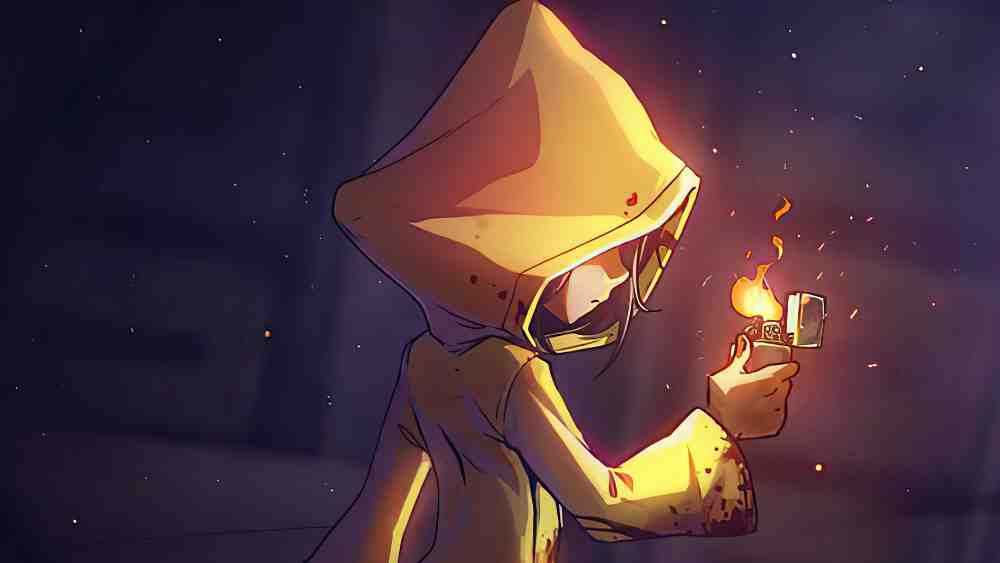
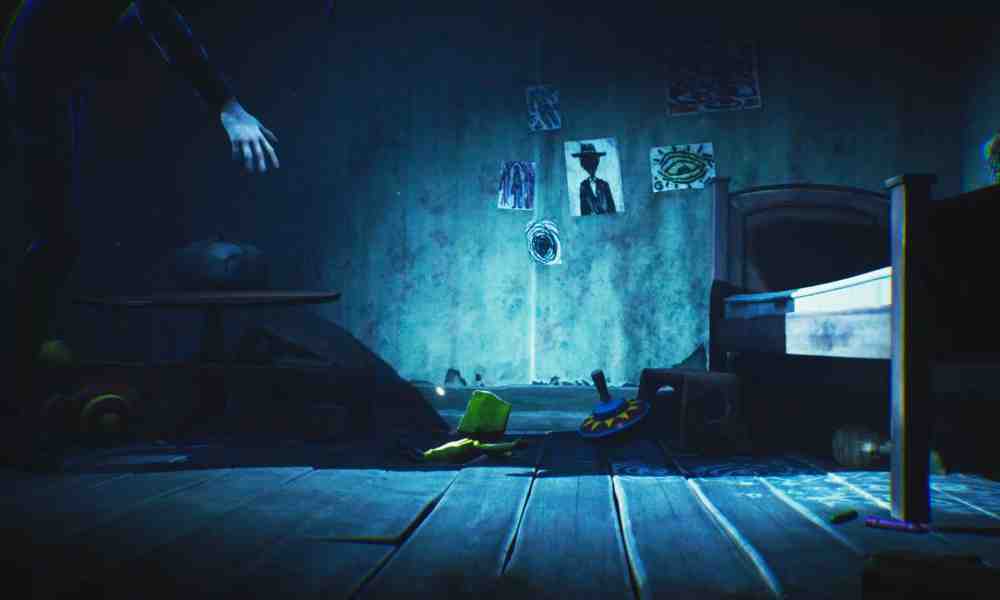
Little Nightmares 2 looks like the story of two children trying to survive the Pale City together. Mono frees Six, Six repeatedly helps Mono cross obstacles, and for most of the game the pair behave like companions who have learned to depend on each other.Then the ending turns that relationship inside out. Six catches Mono as he jumps across the collapsing Signal Tower, looks at him for several seconds, and deliberately lets go. Mono falls into the abyss, grows older inside the Tower, and eventually becomes the Thin Man.The secret ending adds another piece to the puzzle by showing what happens to Six after she escapes. It also confirms where Little Nightmares II sits in the chronology of the series.This article contains major spoilers for Little Nightmares, Little Nightmares II, and their endings.
What Happens at the End of Little Nightmares II?
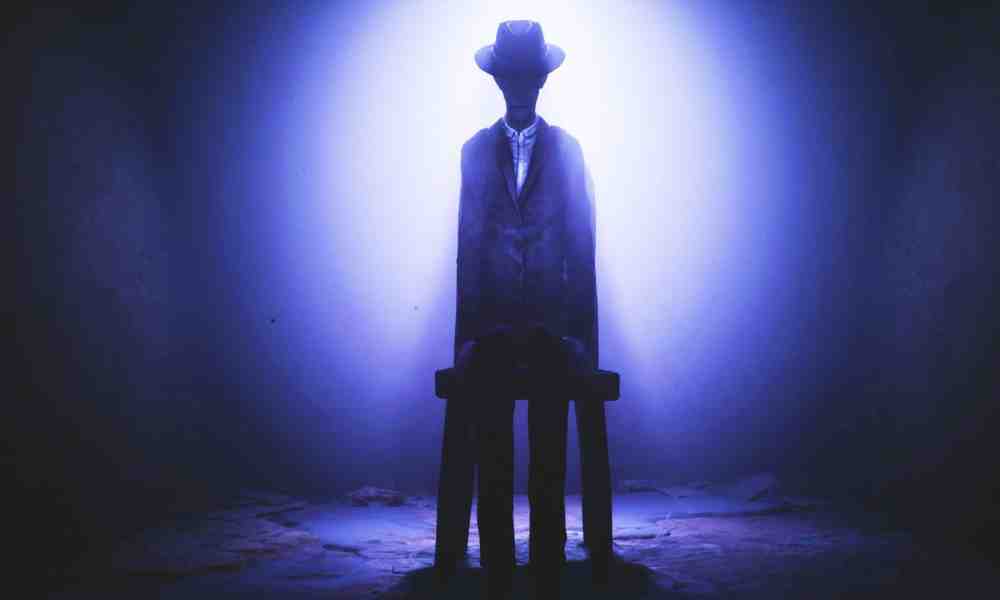
After Mono defeats the Thin Man in the Pale City, he enters the Signal Tower and finds Six transformed into a gigantic distorted version of herself.She is sitting with a music box, apparently calm and absorbed in her own private world. Six is not immediately hostile to Mono. She becomes aggressive only after he begins attacking the music box.Mono repeatedly calls to Six, uses the echoes produced by the Tower to move between portals, and eventually destroys the music box completely. The distorted version of Six collapses and returns to her normal form.The Signal Tower then begins to fall apart. Its walls peel away and reveal the enormous mass of flesh and eyes hidden inside. Mono and Six run toward the television portal that can take them out of the Tower. Six makes the jump first. Mono follows, but the floor gives way beneath him. Six turns around and catches his hand. For a moment, it looks exactly like the many scenes earlier in the game where one child saves the other. Then Six stops. She studies Mono for several seconds and releases him.Why Does Six Drop Mono?Why Does Six Drop Mono?Mono falls into the depths of the Signal Tower. Instead of dying, he lands in a chamber containing a single chair. He sits down. Time begins to pass. Mono grows older, taller, and thinner until the child we have controlled throughout the game becomes the adult figure we already know as the Thin Man. The final image places him behind the same door that Mono has been seeing through television screens since the beginning of the game.
Is Mono Really the Thin Man?
Yes. The ending deliberately shows Mono aging into the Thin Man. What remains less clear is how the transformation works on a larger level. The obvious interpretation is a time loop. The Thin Man hunts Mono, Mono defeats the Thin Man, Six abandons Mono, and Mono eventually becomes the Thin Man who will encounter his younger self. This creates a closed cycle in which the attempt to escape the Thin Man is precisely what creates him.However, Little Nightmares deliberately avoids explaining its world through rigid rules. When senior narrative designer David Mervik was asked whether Mono is literally the same Thin Man in an endless cycle or whether he becomes a successor who takes on the same role, his deliberately ambiguous answer allowed both ideas to coexist.So the safe conclusion is simple: Mono becomes the Thin Man. The exact metaphysics of whether this is a perfect time loop, a repeating role, or something stranger inside the Signal Tower remain intentionally open to interpretation.Mono Becomes the Thin Man in Little Nightmares IIMono Becomes the Thin Man in Little Nightmares II
Why Does Six Drop Mono?
There is no official single answer. This is the most important correction to the old explanation of the ending. David Mervik was directly asked why Six lets Mono fall. He deliberately refused to explain the motive and instead emphasized that Six experiences the scene differently from Mono and differently from the player.That means any explanation claiming that Six definitely recognized Mono as the future Thin Man, definitely wanted revenge, or definitely dropped him because she was hungry goes beyond what the game confirms.What the game does give us are several clues.The strongest one is the music box.Inside the Signal Tower, Six has been transformed, but she is also strangely content. The music box gives her something familiar to hold on to. In a world built from fear, hunger, violence, and helplessness, the Tower has given Six an illusion in which she no longer needs to run.Mono destroys that illusion. From the player's perspective, he is rescuing her. From Six's perspective, he repeatedly enters her safe space, attacks the one object she is protecting, hurts her, and finally destroys the world she was clinging to.That distinction matters because the Signal Tower itself is associated with escapism. Mervik described the Tower as a place that exists because the need for escapism exists. Its Transmission offers the inhabitants of the Pale City something they want to watch while gradually destroying them.Six's music box functions in much the same way. It is comforting, but the comfort is part of the trap. Mono understands that it must be destroyed. Six may not see it that way.
Did Six Blame Mono for Letting the Thin Man Take Her?
This is another plausible factor. Earlier in the Pale City, Mono finally opens the mysterious door through the television and releases the Thin Man. When the Thin Man enters the room, Six tries to get Mono to move. Mono instead hides while the Thin Man reaches Six and takes her away.It would be too strong to call this a confirmed betrayal by Mono. He is a frightened child facing something he barely understands. But Six does not experience the scene from inside Mono's head.From her perspective, the companion she had repeatedly trusted fails to save her at the moment she is captured. Later, that same companion enters the Signal Tower and destroys the music box she desperately wants to protect.Those two events give Six a believable reason to see Mono differently by the time she catches his hand.
Did Six Recognize Mono as the Thin Man?
This is one of the most popular theories, but the game never confirms it. The final scene is staged in a way that encourages the idea. Six does not release Mono immediately. She catches him, holds him, and looks directly at his uncovered face before letting go.Mono has removed the paper bag that normally hides his head. Players naturally wonder whether Six notices some resemblance between Mono and the Thin Man.If she does, the tragedy becomes a paradox. Six drops Mono because she believes he may become the Thin Man, but dropping him is the event that causes him to become the Thin Man.It is an elegant interpretation. It is still an interpretation. Nothing in the game proves that Six can somehow see Mono's future or consciously understands the time loop. Her pause could just as easily represent anger, distrust, fear, or a final decision after everything that happened inside the Tower. The older version of this article treated the recognition theory almost as fact. It should not.
Was Six Already Hungry When She Dropped Mono?
Probably not in the way some early theories suggested. The secret ending is important here. After Six leaves Mono and escapes through the television, the bonus scene shows her emerging from another television alone. A dark, glitching version of Six appears nearby. This figure looks toward an image connected to the Maw, the setting of the first Little Nightmares. Then Six's stomach growls. The sequence strongly connects the end of Little Nightmares II with the hunger that defines Six throughout the first game. In other words, the hunger is presented as something that manifests after her escape from the Signal Tower.That weakens the theory that Six lets Mono fall because she is already afraid she will eat him. It does not rule out the possibility that the Tower changed her in some deeper way, but the game does not show hunger as the immediate reason for the betrayal.
How to Unlock the Secret Ending
The additional ending is unlocked by collecting all 18 Glitching Remains hidden throughout the first four chapters. There are four in The Wilderness, six in The School, four in The Hospital, and four in The Pale City. After collecting all 18, finish the final chapter again. The normal ending still plays, but an additional scene appears afterward.The scene shows Six emerging from the television, encountering the dark glitching version of herself, seeing the reference to the Maw, and experiencing the first ominous stomach growl associated with her hunger.This also unlocks the No More Remains achievement.
Is Little Nightmares II a Prequel?
Yes. The secret ending already makes that interpretation extremely difficult to avoid. Six has not yet reached the Maw, and the final shot connects her directly to it while introducing the hunger that becomes central to her story in Little Nightmares.More importantly, David Mervik later confirmed that the story of Little Nightmares II takes place before the story of the first Little Nightmares.So while Little Nightmares II was released as the second major game in the series, it is chronologically a prequel to Six's journey through the Maw. That also explains why Six begins Little Nightmares II without the powers she obtains from the Lady at the end of the first game.
What Does the Secret Ending Actually Mean?
The secret ending does three important things.First, it connects Little Nightmares II directly to Little Nightmares. Six leaves the Pale City and is pointed toward the Maw.Second, it marks the beginning of her hunger. The growl at the end is not just a random horror sting. It creates a direct bridge to one of the defining mechanics and themes of the first game. Third, it suggests that whatever happened to Six inside the Signal Tower did not simply end when Mono restored her physical form. The glitching version of Six remains.The game never gives this figure a complete explanation. It may represent something the Signal Tower separated from Six, a damaged part of her, or another manifestation of the Transmission. What matters is that the Tower has left a mark on her.
Does Little Nightmares III Explain What Happened to Mono and Six?
No direct answer has been added. Little Nightmares III was released on October 10, 2025 and follows new protagonists Low and Alone through the Spiral. Bandai Namco describes it as a new story in the same universe rather than a direct continuation of Mono and Six's adventure.The developers have also deliberately avoided giving a rigid placement for every character and story on one simple timeline. As a result, the release of Little Nightmares III has not changed the central interpretation of the Little Nightmares II ending. Mono still becomes the Thin Man. Six still deliberately drops him. Little Nightmares II still takes place before the first game. What remains intentionally unanswered is why Six makes that final choice. And that ambiguity is arguably the point.Little Nightmares rarely gives its children clean moral choices. Mono believes he is rescuing Six by destroying the music box. Six may experience the same act as another violation in a world that has already hurt her repeatedly. To Mono, she betrays him. To Six, she may be making the only decision she believes will keep her alive.The ending of Little Nightmares II confirms that Mono grows into the Thin Man and that the game's story takes place before the first Little Nightmares. The secret ending, unlocked by collecting all 18 Glitching Remains, shows Six escaping the Signal Tower, encountering her glitching double, seeing a reference to the Maw, and developing the hunger that follows her into the first game. Why she drops Mono is deliberately left unresolved. The game supports theories involving anger over the music box, distrust after her capture, and possible recognition of Mono's connection to the Thin Man, but none of those explanations has been confirmed as the single canonical answer.