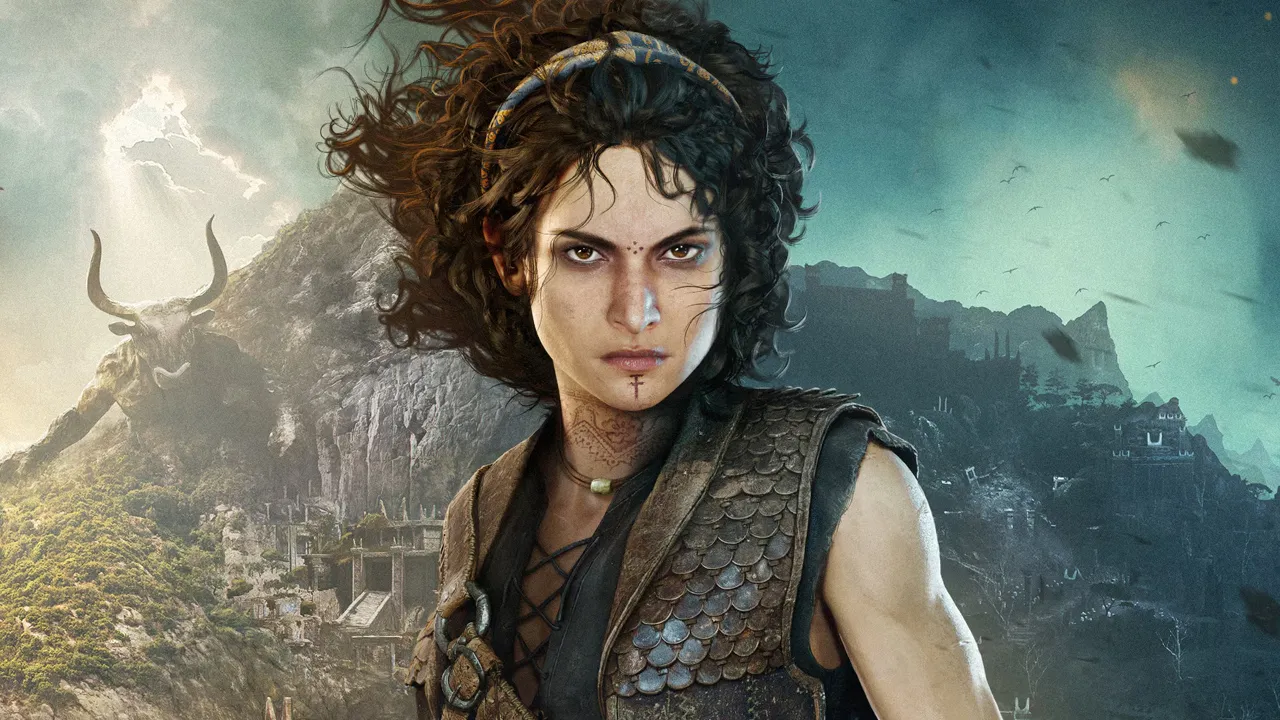
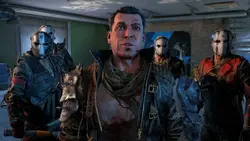
Resonance: A Plague Tale Legacy is a game that few people seemed to expect much from. Its 2025 announcement received a fairly muted response, largely because the protagonist was not Amicia, the heroine of the first two games, but Sophia, the pirate introduced later in A Plague Tale: Requiem. The developers also took the series in a completely different direction, largely abandoning the old style of stealth where one mistake meant you were done. A Plague Tale is now an action game with puzzles that strongly resembles Uncharted. So, how did that turn out? Let's find out.
Story
The story begins 15 years before the events of A Plague Tale: Requiem. Sophia is still just a child when she somehow ends up in a convent, where women in robes conduct mysterious experiments on her, pumping ancient blood into her body through an IV. How did she get there? Why are they doing this? And what exactly is the point? Don't expect clear answers to all of those questions.Sophia is suddenly rescued by her father, who, as it turns out, had no idea where his daughter was and also happens to be a capable sea captain. That could have been the end of it, but then there would be no game. Sophia begins having mysterious visions of a distant island where something is happening, and for some reason a bull keeps appearing. She sketches these dreams in her notebook and gradually turns it into a full-blown artbook.
Her father, meanwhile, decides to leave his old life behind and devote his time and energy to finding the island, hoping to discover the source of Sophia's visions and cure his daughter once and for all. Naturally, we don't play as a child for very long. By the laws of the genre, an adult Sophia eventually has to reach the island herself. How could it be any other way?Overall, the story is decent by the standards of the series. It is far from perfect and relies on plenty of contrivances of varying levels of absurdity, but it can still surprise players who go in blind, at least while the atmosphere continues to build and the central mysteries remain unresolved. Sophia is Greek, after all, and where there are Greeks, mythology is never far behind. It does not take long to realize that the island with the bull is none other than Crete, the legendary home of King Minos and the Minotaur. You can probably guess where things go from there.And yes, there are no rats this time. None at all. The developers clearly wanted to expand the lore of the universe, so the familiar waves of rodents are gone. That is both good and bad. The rats became the defining feature of the series, but making a third game around exactly the same idea would have been risky too. Players could simply get bored. A Plague Tale loses part of its identity here, but gains something else in return: variety.
Visuals
Almost the entire game takes place on the island, which makes Resonance feel very different from the original duology in both tone and atmosphere. Crete is bright, colorful, and vibrant. There is a reason many critics and players have called Resonance: A Plague Tale Legacy one of the best-looking games around right now.Once the story moves underground or indoors, another defining feature appears: sheer scale. Almost everything around you seems designed for one purpose, to impress. If there is a mysterious chasm, it is so deep you cannot see the bottom. If there is a statue, it is enormous. Sophia constantly feels like a grain of sand next to the monumental structures of Crete. Most of the time, the effect works exactly as intended, and there is always something striking to look at. As long as you do not start wondering how ordinary people were ever supposed to live in places like this, it all looks fantastic.Image unavailableThe visual spectacle is reinforced by excellent use of light and shadow. Both play a major role here, serving not only as important parts of the composition but also as gameplay mechanics.The budget limitations are still visible, though, especially in close-up cutscenes. Sometimes the lip-sync looks noticeably off. At other times, characters seem to turn into stone statues with barely any facial movement at all. As impressive as the game can look, this is still an AA production rather than a top-tier blockbuster.
Gameplay
Broadly speaking, the gameplay is built around three main elements, with a fourth added later on: exploration with collectibles, upgrades, and all the usual shiny distractions we love, combat against groups of enemies, environmental puzzles, and, surprisingly, stealth. The stealth never comes close to the quality of the original duology, but the game is also trying to do something very different. You can crouch and hide behind walls, and that is about it. Once you get used to the system, you barely need to hide at all. Just run to the next safe point and activate the ancient Greek light source. Light plays a major role in these stealth sections, but there is nothing particularly elaborate about it. It mostly functions as a safe zone.Exploration and puzzles are much more interesting. At a basic level, there is nothing especially new here. This is familiar action-adventure territory. Sophia jumps, runs, and uses a grappling hook to cross smaller gaps. There is no open world, only linear levels with a handful of side paths where something useful is almost always waiting.Image unavailableAs you progress, you can collect Charms that provide bonuses and Blades with different combat perks, but the most valuable resource is Resonance Points. These are what you use to upgrade Sophia. There are not many abilities, and all of them are combat-focused, but they add some variety to an otherwise straightforward combat system that starts feeling repetitive fairly quickly. A careful playthrough gives you enough opportunities to unlock the entire skill set without much trouble, as long as you do not sprint from point A to point B and occasionally take the time to look around.The puzzles feel like a greatest-hits collection from adventure games you have probably played before. Let's count them off. Rotating mirrors to redirect beams of light? Check. Finding the correct position where three gemstones line up so you can shine an ancient Greek light through them? Of course. Spike platforms? Absolutely. Looking for the right lever? Naturally.None of this is new, but it is hard to deny that these ideas still work. How many modern adventure games like this can you actually name? Uncharted 4: A Thief's End came out in 2016, while Shadow of the Tomb Raider followed in 2018, and we still do not have many strong alternatives. The recent Indiana Jones and the Great Circle comes close, but its pacing is much slower.Image unavailableThe end result feels a bit like watching the latest entry in a familiar movie franchise. You know exactly what you are going to get, and that is precisely why you showed up. Whether that is a good thing depends entirely on how you feel about the genre. If you love adventure games, this kind of gameplay can feel refreshing. If you came here for slow, methodical stealth with a sling in hand, this is not the game for that.Image unavailableFinally, there is the combat, probably the most divisive part of the game aside from the story. Asobo has never really been known for action combat, and unfortunately, it shows. All the standard ingredients are here: light attacks, heavy attacks, yellow attacks, red attacks, shields, parries. The full package. Just like the puzzles, none of that sounds particularly bad on paper. The real question is how well it all comes together, and this is where the game starts to fall apart.The enemies barely change, and they behave much the same in the first hour as they do in the last. Sophia's basic combat patterns also remain largely unchanged all the way to the credits. Bosses often feel like regular enemies with larger health bars. Abilities add some variety for a while, but once you unlock the option to parry normally unblockable red attacks, combat becomes dangerously close to a one-button exercise.Image unavailableMuch of the difficulty comes from an uncooperative camera and the general chaos on screen. Animations can look jerky, movement feels abrupt, and the game happily throws ten enemies at Sophia at once. There is none of the flow you might remember from the Batman: Arkham series, which also had a relatively simple combat system but made every encounter feel dynamic. There is no smooth sword dance here either. A typical fight is Sophia chaotically bouncing from one enemy to another until her ultimate ability is ready. Yes, the game has one of those too.***At this point, it probably sounds like I have criticized Resonance: A Plague Tale Legacy more than I have praised it. Some people may think I cannot make up my mind. The controversial story, clumsy combat, and overwhelming familiarity of many gameplay ideas are all real problems. In almost every respect outside its art direction and graphics, this is a fairly average game. But there is a catch.I happen to love the adventure genre. I miss the feeling Nathan Drake and Lara Croft used to give me, and Resonance unexpectedly brought some of that back. All of its individual parts have been fitted together with genuine care. Yes, Asobo still lacks experience in some areas, but the studio clearly tried to create something distinctive and memorable. You can comfortably finish the game in around eight hours. It is not stressful, it is not especially challenging, but it keeps moving and, most importantly, it is entertaining. I had a great time with it and never regretted playing. And if I had to redirect light through another abandoned giant hall for the hundredth time, so be it.There is also good news for Xbox Game Pass subscribers, who can play the game without an additional purchase. Even if you are on another platform, though, Resonance: A Plague Tale Legacy is worth the price. It has a kind of uncompromising sincerity, and the developers' affection for what they built comes through in almost every detail.
Spoilers
Show spoilerHide spoiler
Most of the story elements that have attracted criticism revolve around the game's biggest secret: the Minotaur. The twist is that the bull, at least in the traditional sense, does not really exist. The writers once again use the idea of an infected child, this time King Minos' son. The prince suffers from something very similar to Hugo's condition, although exactly how and when it began is once again left unexplained. Asterion, not to be confused with Astarion from Baldur's Gate 3, does not command endless swarms of rats. He has tendrils instead. The Beast is essentially a flying manifestation of that corruption, and Sophia has to keep it at bay with light. The concept itself is not bad, although the monster could have been much more interesting.Image unavailableThe developers also seem to be big Assassin's Creed fans because Sophia carries a mysterious Minoan sphere that opens doors and activates ancient mechanisms throughout the island. She is also somehow connected to Theseus, the hero who defeated the Minotaur in Greek mythology. At first, the whole thing feels genuinely mysterious, but eventually we learn that Theseus is actually Ariadne, the daughter of Minos and Asterion's sister, who entered the trials in disguise while trying to save her brother. In other words, the game simply removes the familiar male hero from its version of the myth and puts a powerful woman at the center instead. Why the writers felt the need to rewrite such a famous story this aggressively is difficult to understand. The game also never gives a particularly satisfying explanation for Sophia's connection to Ariadne. Maybe the Animus did it.At the same time, the reworked myth, the Minotaur, and the labyrinth are much deeper than they might initially appear. Here, the Minotaur represents the evil and fear people bury inside themselves for years, while Ariadne's thread guides the heroine through the darkness, keeping her away from the monster and the madness closing in around her.It is surprisingly subtle work, almost psychoanalytic in places, and unfortunately many players may never notice it because the game rarely emphasizes these ideas directly. At its core, the entire story is about wandering through a personal hell where light represents flashes of awareness. Those moments either help a person finally find their way back to the surface or leave them trapped at the very bottom for good. Sophia is an example of someone who manages to escape. The Minotaur, Minos, and several others do not. There is clearly more thematic depth here than in the original duology, but the execution could have been much stronger.
7/10
NOWGAME SCOREVerdict
A quick look at the game’s strengths and weaknesses.
Pros
Excellent art direction and graphics.
Huge environments and impressive use of light.
The atmosphere of classic action-adventure games.
Solid puzzles and enjoyable exploration.
A fresh take on the A Plague Tale universe.
The game never overstays its welcome and maintains a good pace.
Cons
Repetitive combat that gets old quickly.
Limited enemy and boss variety.
Simplified stealth.
A story built around too many contrivances and questionable decisions.
The budget limitations are noticeable in cutscenes.
Many mechanics feel overly familiar from other games.