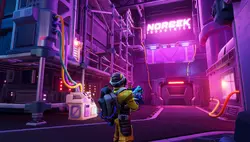
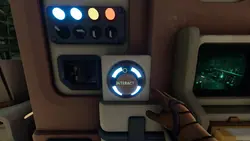
In the We Were Here Tomorrow laboratory, you'll need to make resin for a 3D printer. One player controls the chemical dispenser while the other positions a container beneath the nozzles. In this guide, we'll explain the recipe, the correct order for changing the settings, and the mistakes that prevent the machine from accepting the finished mixture.
Add the chemicals in this order: Styrene, Acrylonitrile, Butadiene, Styrene. On the selector outside the chamber, these correspond to positions 4, 3, 1, 4. You need four portions in total, with Styrene added twice, both at the beginning and at the end of the process.Image unavailableThe recipe is hidden in a laboratory note. It tells you to mix one part Acrylonitrile with an equal part Butadiene, but warns that the mixture is unstable without Styrene before and after those additions. That means you can't start straight away with Acrylonitrile and simply finish with Styrene. The first portion is just as important as the last.Image unavailable
How to split the tasks between the two players
You'll find this puzzle in the research department's laboratory, after the circuit board puzzle. The shrunken player enters a small blue chamber and moves a block holding the container beneath three nozzles. Their normal-sized partner stays outside, where the dispenser selector and mixture testing button are located. You don't need to find another vessel, since the container is already inside.First, check the labels on the nozzles. From left to right, they are Acrylonitrile, Butadiene, and Styrene. We recommend saying the name of each chemical before dispensing it and waiting until your partner confirms that the container is in position. That way, you won't miss a portion by switching the dispenser too early.Image unavailable
What order to add the chemicals in
Start with Styrene, and after each addition wait for your partner to move the container:
Styrene, position 4. The player inside the chamber moves the container beneath the STYRENE nozzle. Once it is in place, the partner outside selects position four and dispenses the first portion.
Acrylonitrile, position 3. Move the container beneath ACRYLONITRILE. Then set the dispenser to the third position.
Butadiene, position 1. Place the container beneath BUTADIENE, then choose the first position on the selector.
Styrene again, position 4. Move the container back beneath STYRENE and add one more portion. The recipe is now complete.
Image unavailableAfter the fourth addition, the player outside presses the mixture testing button. The machine will take the contents of the container. If you've done everything correctly, you'll hear a success signal and the door will open. There's no need to add any more chemicals after that. You can continue through the laboratory.
Why the 4, 3, 1, 4 recipe isn't working
Most often, the problem is the container's position. The machine only adds a chemical when the block is directly beneath the corresponding nozzle. If your partner has already selected the correct number while you're still moving the container, the chemical may miss it. Before the next portion, confirm that the previous one was actually dispensed. If necessary, the player outside can look through the glass and help line up the block.Another trap is positions 2 and 5. The note labels them Slyreen and Hutadyne. The names resemble the chemicals you need, but there are no separate nozzles for them. Use only positions 4, 3, and 1 for the recipe. And don't forget to return to position four at the end: three additions aren't enough.If the door stays closed after testing and the container has emptied, the machine rejected the mixture. Start again with the first portion of Styrene and repeat all four steps. It's too late to add a missing chemical after a failed test, since the previous mixture has already been removed.