Food is one of the most important progression systems in Valheim. You do not starve if you stop eating, but food determines your maximum Health, Stamina, and, from the Mistlands onward, Eitr. A good food setup changes how safely you can explore, fight, block, sprint, dodge, build, farm, and use magic.The original version of this guide was written during Valheim's early-access years. Valheim 1.0 launched in September 2026 and added the Deep North together with more than 20 new food items, new crops, new kitchen progression, and new endgame recipes. This guide has therefore been rebuilt around the current 1.0 food system.
How Food Works in Valheim
You can have up to three different food effects active at the same time. You cannot eat two copies of the same food simultaneously.Each food can increase:
Health — important for surviving damage, blocking, and melee combat.
Stamina — used for running, jumping, dodging, attacking, farming, mining, and building.
Eitr — the magic resource used by Mistlands and later magical weapons.
Health regeneration — determines how much HP is restored during regeneration ticks.
Food bonuses gradually decrease as their duration runs out. For difficult fights, eat shortly before entering combat rather than relying on food that is almost finished.
Where to Find Food Ingredients
Meadows and Black Forest
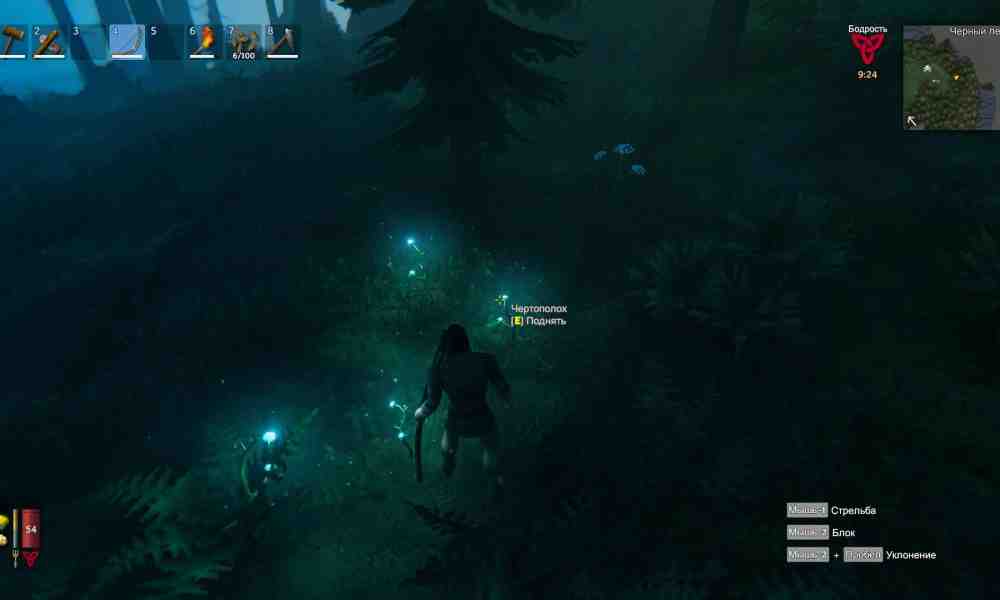
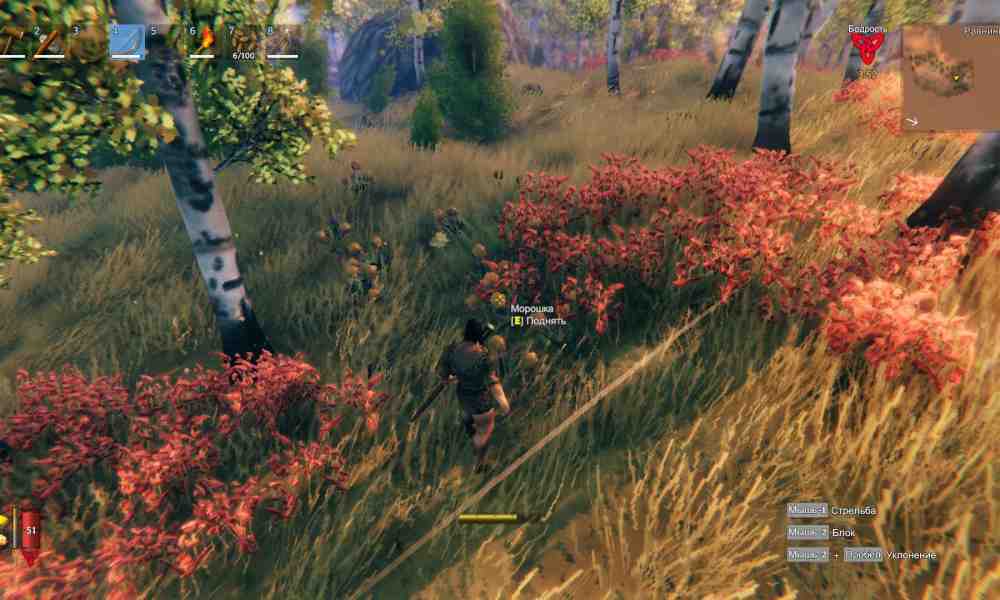
Where to Find Thistle, Berries, Mushrooms, and Carrot SeedsWhere to Find Thistle, Berries, Mushrooms, and Carrot Seeds
Raspberries — grow on bushes in the Meadows and respawn after harvesting.
Blueberries — grow on bushes in the Black Forest and respawn after harvesting.
Mushrooms — found on the ground in the Meadows and Black Forest.
Yellow Mushrooms — commonly found inside Burial Chambers, Troll Caves, and other dark locations.
Honey — obtained from Beehives. Find Queen Bees in abandoned buildings and use them to build your own hives.
Thistle — a glowing plant found mainly in the Black Forest and Swamp.
Carrot Seeds — found as wild seed plants in the Black Forest. Plant them with a Cultivator.
Dandelions — common in the Meadows and used in several recipes and feasts.
Boar Meat — dropped by Boars.
Deer Meat — dropped by Deer.
Neck Tail — dropped by Necks near water.
Bear Meat — Valheim 1.0 added Bears to the Black Forest. Their meat can be cooked directly.
Swamp
Turnip Seeds — found on wild seed plants in the Swamp.
Entrails — dropped by Draugr and used for Sausages.
Bloodbags — dropped by Leeches and used in Black Soup, Blood Pudding, and meads.
Ooze — dropped by Blobs and Oozers.
Thistle — also grows in the Swamp.
The Ocean also matters around this stage because Serpents provide Serpent Meat for some of the strongest pre-Mountain Health food.
Mountain
Onion Seeds — found in Mountain chests and ruins.
Wolf Meat — dropped by Wolves.
Freeze Glands — dropped by Drakes and used for Eyescream.
Plains
Where to Find Cloudberries in ValheimWhere to Find Cloudberries in Valheim
Cloudberries — grow throughout the Plains.
Barley — found mainly in Fuling villages and normally farmed only in the Plains.
Flax — another Plains crop. It is not food, but is used for Linen Thread.
Lox Meat — dropped by Lox.
Eggs and Chicken Meat — chicken farming becomes available after later Plains progression.
Barley can be processed in a Windmill to create Barley Flour.
Mistlands
Jotun Puffs — found naturally in the Mistlands and can be cultivated there.
Magecaps — another farmable Mistlands mushroom used for magic food.
Hare Meat — dropped by Hares.
Seeker Meat — dropped by Seekers and Seeker Soldiers.
Royal Jelly — found mainly in Infested Mines.
Sap — extracted from Ancient Roots.
Blood Clots — dropped by Ticks.
Anglerfish — caught around the Mistlands and used for Fish 'n' Bread.
Mistlands is where Eitr food becomes part of normal progression.
Ashlands
Fiddlehead — gathered from Ashlands vegetation.
Smoke Puff — an Ashlands mushroom used in several foods.
Vineberry Cluster — harvested from Ashvine.
Asksvin Tail — dropped by Asksvin.
Volture Meat and Volture Eggs — obtained from Voltures and their nests.
Bonemaw Meat — obtained from Bonemaws.
Ashvine can be cultivated outside the Ashlands, but it needs cultivated soil and a nearby wall to climb.
Deep North
Valheim 1.0 added an entirely new food tier.
Lingonberries — gathered in the Deep North and also used to tame Moose.
Kale — obtained from Deep North seed sources and then farmed at a suitable southern base.
Oats — grown from Oat Seeds and processed through the Windmill.
Poteitr — can be eaten raw for Health, Stamina, and Eitr or used in multiple endgame recipes.
Moose Meat — obtained from Moose.
Seal Blubber — obtained from Seals.
Ice — used in several northern recipes.
How to Farm Crops
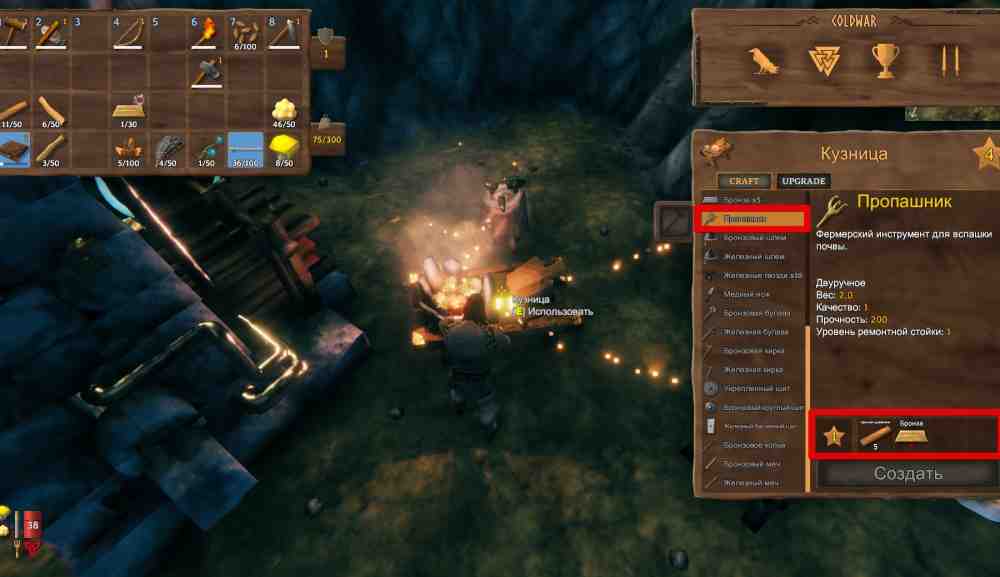
You need a Cultivator, crafted at a Forge with:
5 Core Wood.
5 Bronze.
How to Craft a Cultivator and Plant Crops in ValheimHow to Craft a Cultivator and Plant Crops in ValheimMost crops require:
Cultivated soil.
Enough empty space around the plant.
An unobstructed view of the sky.
A compatible biome.
Carrots, Turnips, and Onions use a seed cycle. Barley and Flax are replanted directly. Jotun Puffs and Magecaps require the Mistlands. Vineberries need a wall for Ashvine to climb. Kale, Oats, and Poteitr are part of the Deep North farming progression.
How to Cook Food
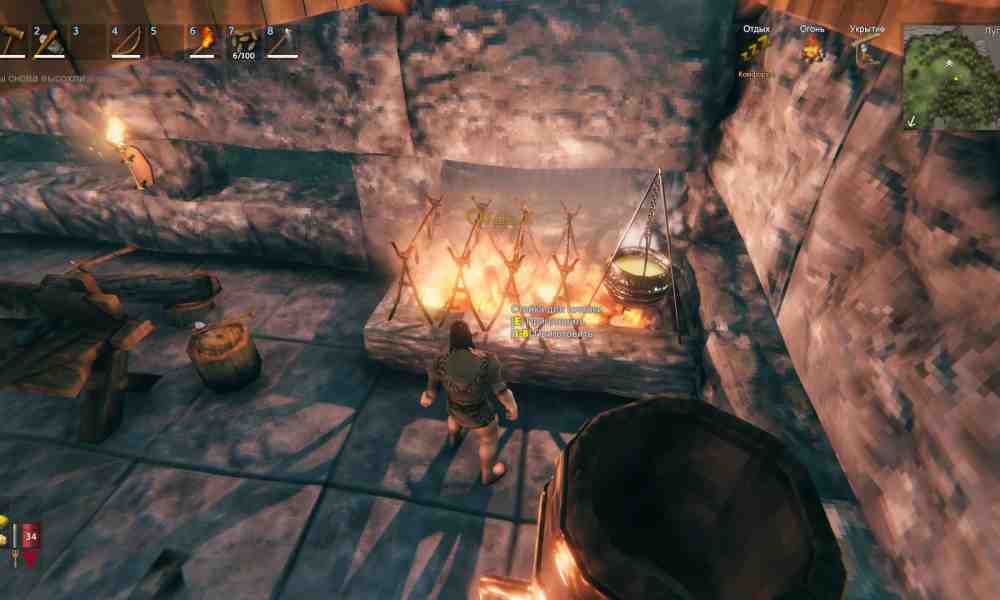
Cooking Station and Cauldron in ValheimCooking Station and Cauldron in Valheim
Cooking Station — basic meat, Neck Tails, fish, and similar food.
Iron Cooking Station — larger and later-tier meat.
Cauldron — soups, stews, sausages, advanced meals, and late-game recipes.
Food Preparation Table — uncooked oven dishes, Feasts, Raw Fish, and fishing bait.
Stone Oven — Bread, pies, Fish 'n' Bread, Misthare Supreme, and other baked food.
The Cauldron starts with 10 Tin and gains stronger recipes through upgrades. By Valheim 1.0, its progression extends into the Deep North tier.The Cooking skill also improves as you prepare food. Higher levels reduce cooking time and can grant extra output.
Main ingredients: Moose Meat, Poteitr, Lingonberries, and Oat Flour.
Method: prepare the batter and bake it in the Stone Oven.
Stats: 37 Health, 18 Stamina, 105 Eitr.
Duration: 30 minutes.
Feasts and the Serving Tray
Feasts are large shared meals prepared at the Food Preparation Table. Place them with the Serving Tray. A placed feast contains 10 servings, making this system particularly useful in multiplayer.Current feast progression includes:
Whole Roasted Meadow Boar — Meadows.
Black Forest Buffet Platter — Black Forest.
Swamp Dweller's Delight — Swamp.
Sailor's Bounty — Ocean.
Hearty Mountain Logger's Stew — Mountain.
Plains Pie Picnic — Plains.
Mushrooms Galore á la Mistlands — Mistlands.
Ashlands Gourmet Bowl — Ashlands.
Northern Morning Fare — Deep North.
Northern Morning Fare
The Deep North feast introduced in Valheim 1.0 requires:
3 Cooked Moose Meat.
5 Poteitr.
2 Oat Flour.
1 Seasoning of the Gourd.
Each serving provides:
85 Health.
85 Stamina.
43 Eitr.
50-minute duration.
Best Food Combinations
For Melee and Boss Fights
Use two strong Health foods and one Stamina food. This gives you room for blocking and mistakes without leaving you starved for movement.
For Exploration, Building, and Farming
Use one Health food and two Stamina foods. A large Stamina pool is more useful when running, mining, chopping wood, or building.
For Magic Builds
Use one Health or Stamina food and two Eitr foods, or three Eitr-oriented foods when you need the largest possible magic pool.By the Deep North, strong magic options include:
Fish Soup.
Oven Pancake.
Meatballs and Poteitr.
Smoked Fish.
Oatmeal as a hybrid Stamina/Eitr food.
What Changed from the Old Food System?
If you are returning to Valheim after several years, the biggest changes are:
The recipe pool now extends through Mistlands, Ashlands, and Deep North.
Magic builds use Eitr food.
The Food Preparation Table is central to advanced cooking.
The Stone Oven is required for many high-tier meals.
The Bog Witch update added Feasts, the Serving Tray, and the Cooking skill.
Valheim 1.0 added more than 20 new food items and the Deep North food tier.
Cultivating soil does not make wild berry bushes respawn faster.
Crops require the correct soil, spacing, light, and biome conditions.
Food is no longer just a way to add a little Health before a boss. In Valheim 1.0, your farm and kitchen are a major part of character progression. Maintaining crops, upgrading the Cauldron, building a Food Preparation Table and Stone Oven, and keeping separate food sets for combat, exploration, and magic will make every biome significantly easier.